
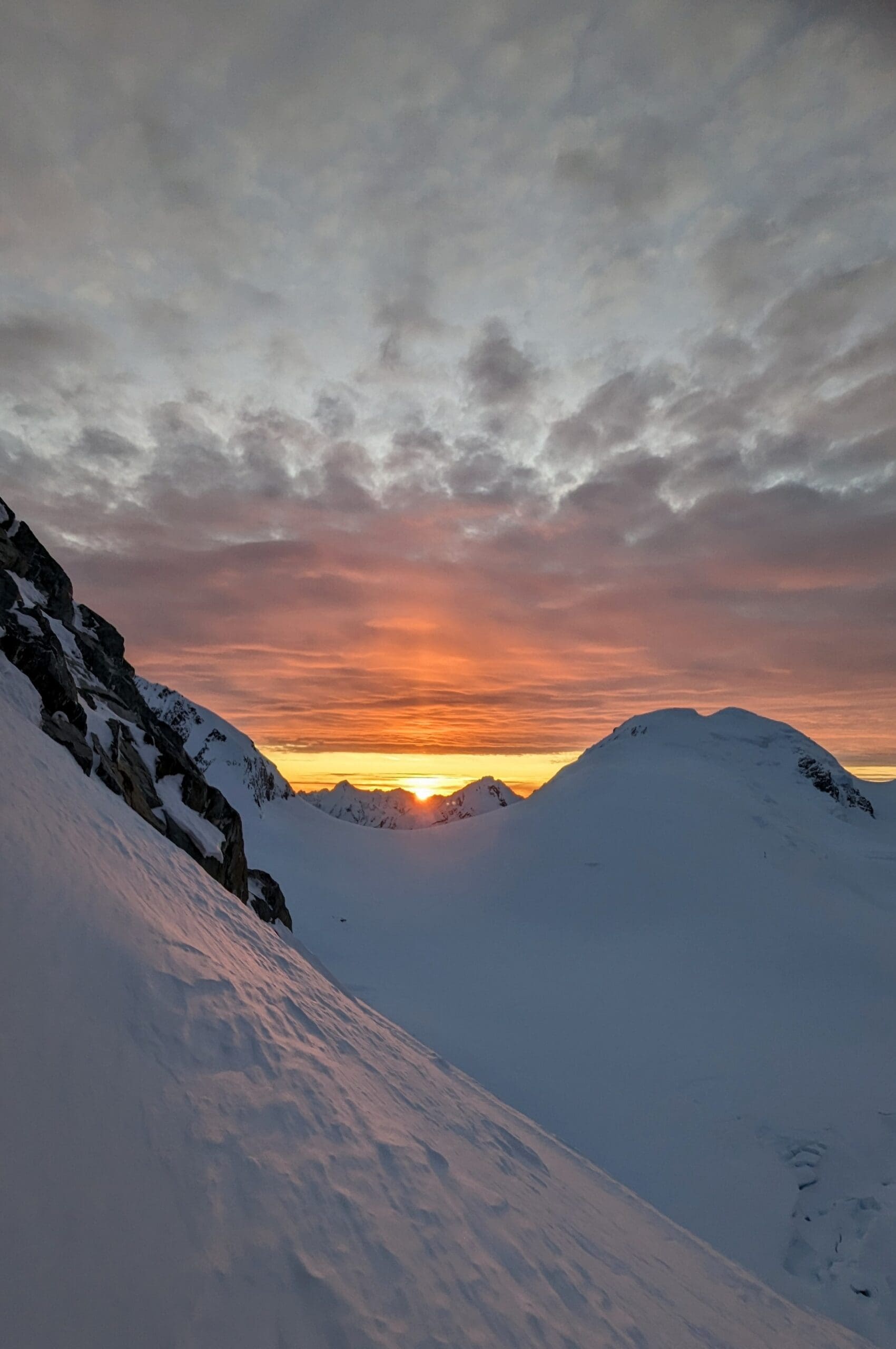
This is a proper flashback, one of those trips that I probably won’t ever forget.
In August 2023, our little crew of three had come off a strong start to the winter. We’d climbed plenty of steep ice and mixed routes in Wye Creek and on the West Face of Remarkables, and we felt strong; ready for something bigger.
The forecast was looking excellent. A large and slow moving high-pressure system was moving over the country, with calm weather and no obvious bad days on the horizon. We flew into Tasman Saddle Hut with eight days of food, alpine climbing gear and skis.
As it turned out, we would end up spending five days up there without a single bad-weather day. It was myself, Justin: a strong and reliable climbing partner of mine for many years, and his good friend Pat. Pat was less experienced than Justin and I, but he was capable, motivated and keen for the adventure.
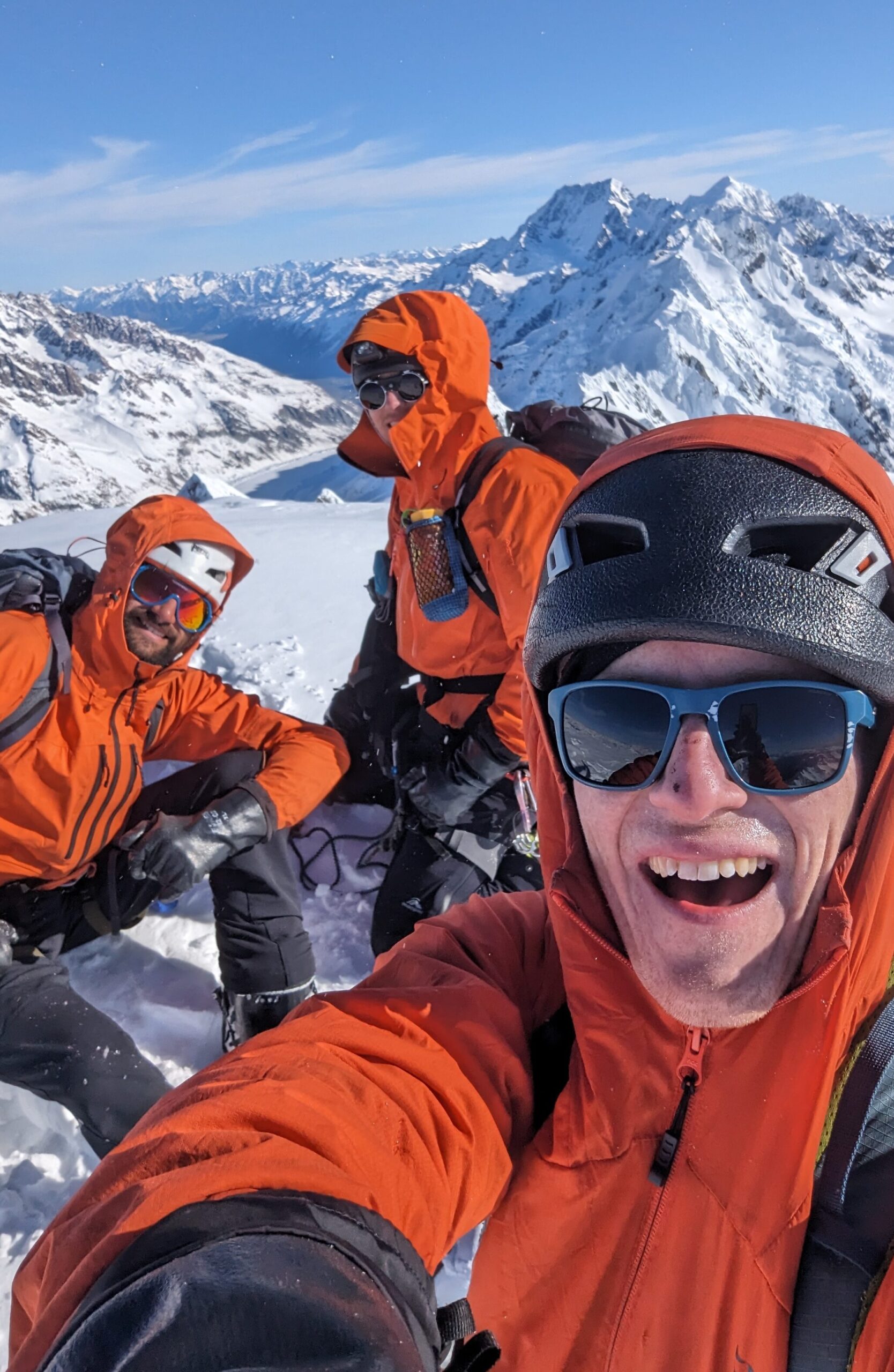
We flew in during the afternoon, dropped our gear and went out for a recce. We skied up towards the south base of Mt Walter to check out the ice conditions and were happy with what we found. The plan for the following morning was obvious: Ice Creme, the classic ice line on the face.
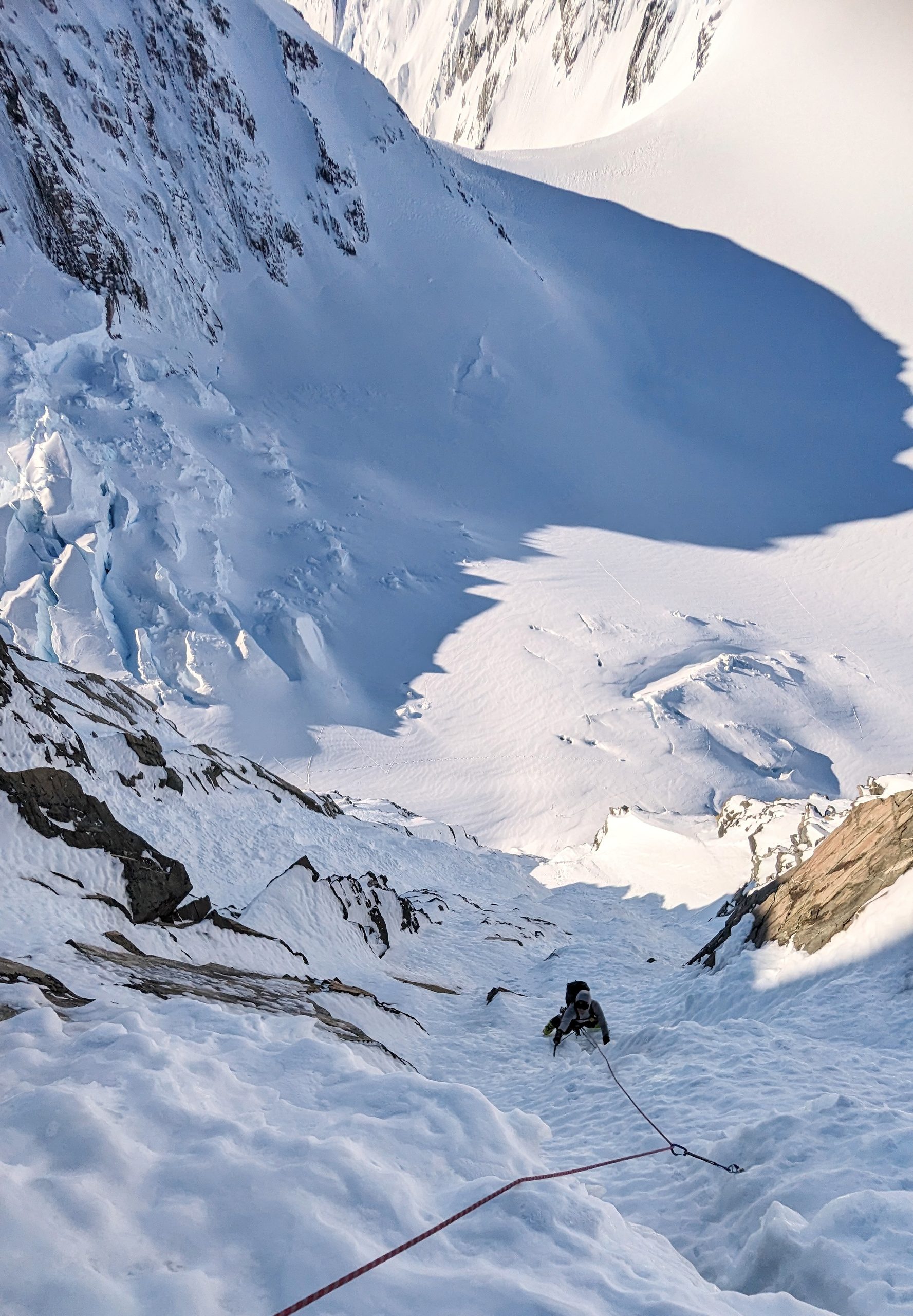
Ice Creme is around 400 metres long and graded Mt Cook Grade 4+. The ice is aerated and neve-like (hence the name), making for excellent first time placements for the climbing but providing less-than-ideal confidence in your ice-screws. The next morning we climbed it in good style, Justin and I swinging leads all the way up.
We were climbing efficiently and having a great time. After topping out on Ice Creme, we made our way back down to the col between Mt’s Elie and Walter. By the time we reached the saddle, we’d climbed with enough enthusiasm and efficiency that we still had plenty of energy left.
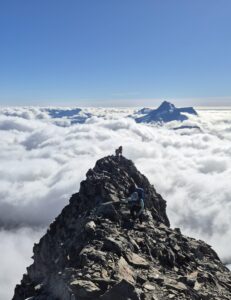
So we made a spontaneous decision. We ditched the heavier gear and made a dash for the summit of Elie de Beaumont. We soloed the remaining terrain to the summit and were rewarded with one of the most special summit experiences I’ve had.
There was no wind. The light was incredible, the clouds were sitting beautifully across the landscape, stretching far out into the Tasman Sea in a layer of white, luminous fluff. After the effort of the day, and the ease in which everything happened, it felt like we were completely at home up high. Eventually, we tore ourselves away from that special palace and made quick time back to our bags and skis. The following day, Justin and I wanted to go skiing, so we headed towards Mt Green’s well-known east face.
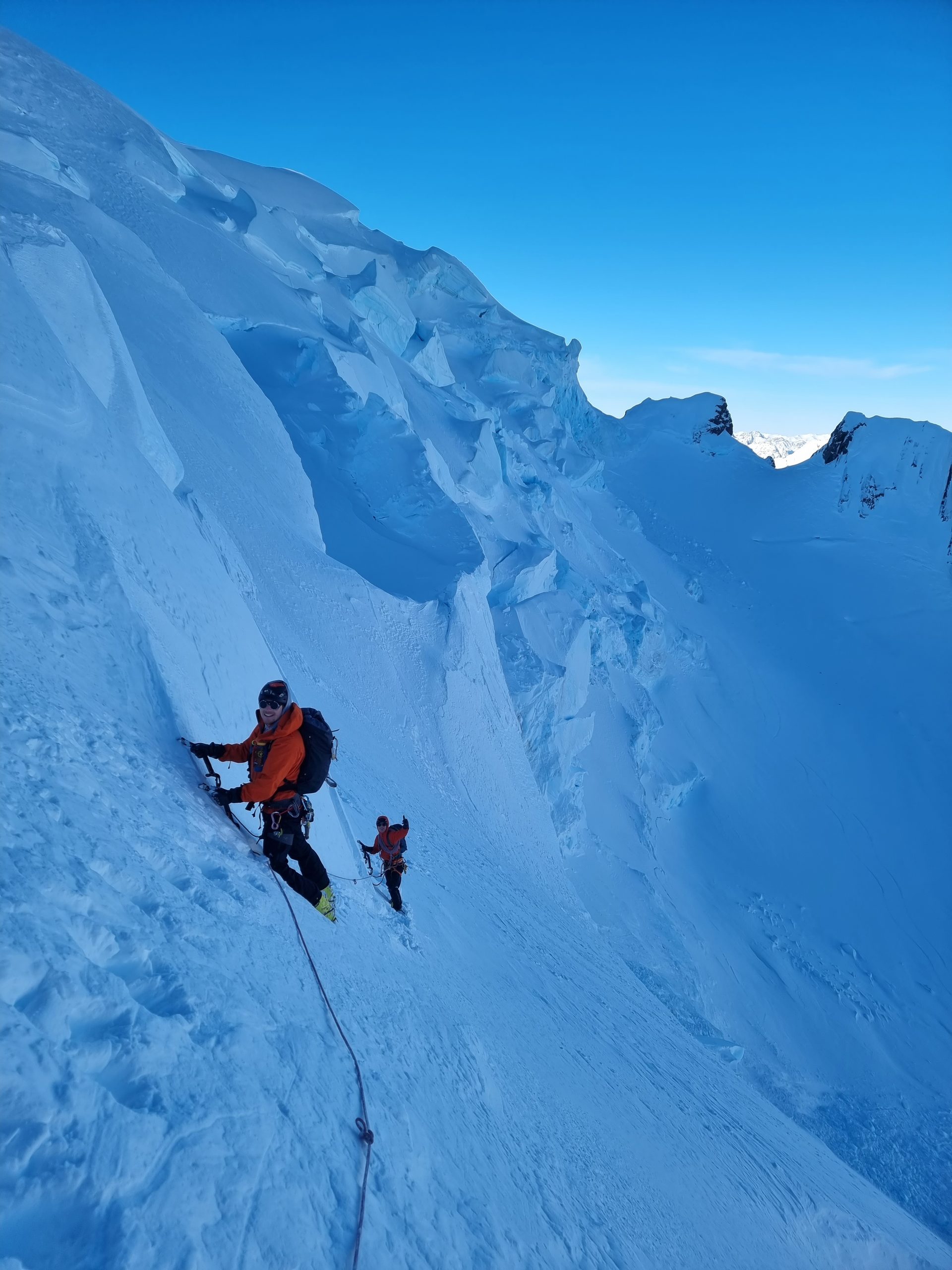
After assessing the snowpack deciding the conditions were stable enough, we boot-packed up a steep snow slope. This leads to a fantastic snowy arete, like a catwalk in the sky, it leads you up on to the basin under Mt Green’s east face. We then re-assessed snowpack conditions, and decided it was good enough for us. After a short but steep bootpack up to the summit, we skied the east face before continuing down under the south face. Around 1,000 metres of boot-deep powder from the top of Mt Green to the Tasman Glacier. This felt like a significant ski for us.For me, it had even greater significance. It was the final ski I needed for my ski guiding logbook.
After a huge day of climbing, summiting and skiing, getting back to the hut and cracking a beer was a pretty satisfying feeling. 2 awesome days out of 2!
Upon planning for the next day’s activities, I suggested to Justin that we go and try a smear of ice on the south face of Mt Green. It was as far as I knew, unclimbed. I’d never seen it in this condition, and I’d never seen it mentioned in any guidebook or trip report.
But there it was: what looked to be a roughly 40-metre smear of ice forming on a steep slab. It linked the lower face and rock band to the upper slopes, allowing one continuous line from top to bottom, in an area where no other route was known. I showed Justin some photos and suggested we go and have a look. Justin didn’t take much convincing.
Pat was feeling more rested and wanted to come along, either to climb it himself or support us on the journey. The next morning we woke before dawn, and made our way back towards the saddle below Mt Green’s east face.
Once we reached the saddle, Pat, after having looked at the climb, decided he would take photos.We ditched our skis and descended onto the glacial ramp that provides access to the south face.
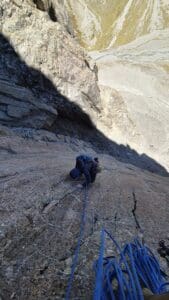
We roped up. I took the rack, and led the first pitch, around 30 metres, with a couple of steep moves immediately off the ground before easier gully climbing above. I brought Justin up, and we looked up at what we expected to be the crux. The ice was forming over a steep slab that reared back dramatically. The underlying rock was probably just off vertical, but the way the ice had formed made it feel almost overhanging.
The ice was fascinating. Large blobs provided the best tool placements and the occasional opportunity for an ice screw, but between those features the ice was thin. That meant some sections had to be run out, and the climbing demanded a delicate touch.
Justin took the lead and climbed it in excellent style. Following him was an absolute joy. It was technical and pumpy, and you definitely couldn’t afford to overswing your tools or climb aggressively.
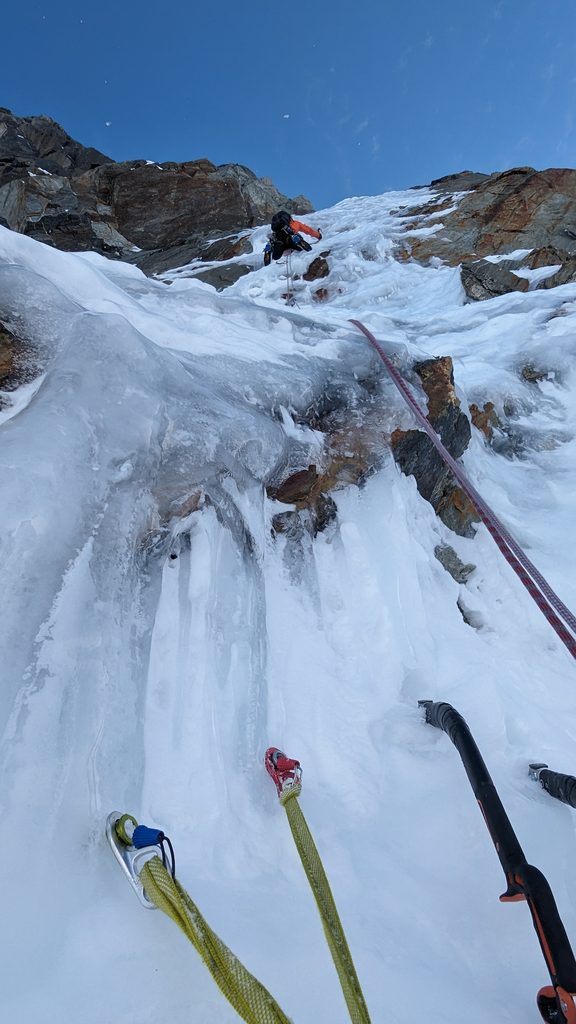
When I reached the belay, we gave each other a big high five. We knew the route was going to go. From there, I took the lead and we simul-climbed around 100 metres of WI3 before branching right through some rocky terrain.
Justin chose to lead directly up a rock step, around M4 to M4+, before handing the lead back to me. I continued towards the base of the summit headwall and upper snow slopes. The climbing became a little trickier again, only around M3 but with powdery snow and relatively poor protection. Justin then led a short WI3+ step before we transitioned onto easier ground and post-holed the final 100 metres of snow slope to the summit. Mt Green summit in two days and from two different ways!
The crux was definitely the money pitch, but the rest of the route was engaging without being relentlessly difficult. That combination made it particularly appealing, interesting climbing, a standout technical pitch but a relatively low commitment overall. We thought it was a really good route.
Afterwards, I checked through the available information and spoke with members of the climbing community. As far as we could tell, there was no record of the line having been climbed, and nobody has disputed it being a new route. So, we believe we’d found a new line.
We called it Chocolate Cake, Mount Cook Grade 5. We felt it was a fitting name to the other route we had climbed and I had also crammed a chocolate cake into my food box at the last minute, and it became a bit of a joke the whole trip. The descent was straightforward via the east face of Mt Green, followed by a ski back to the hut. We were home after around ten hours.
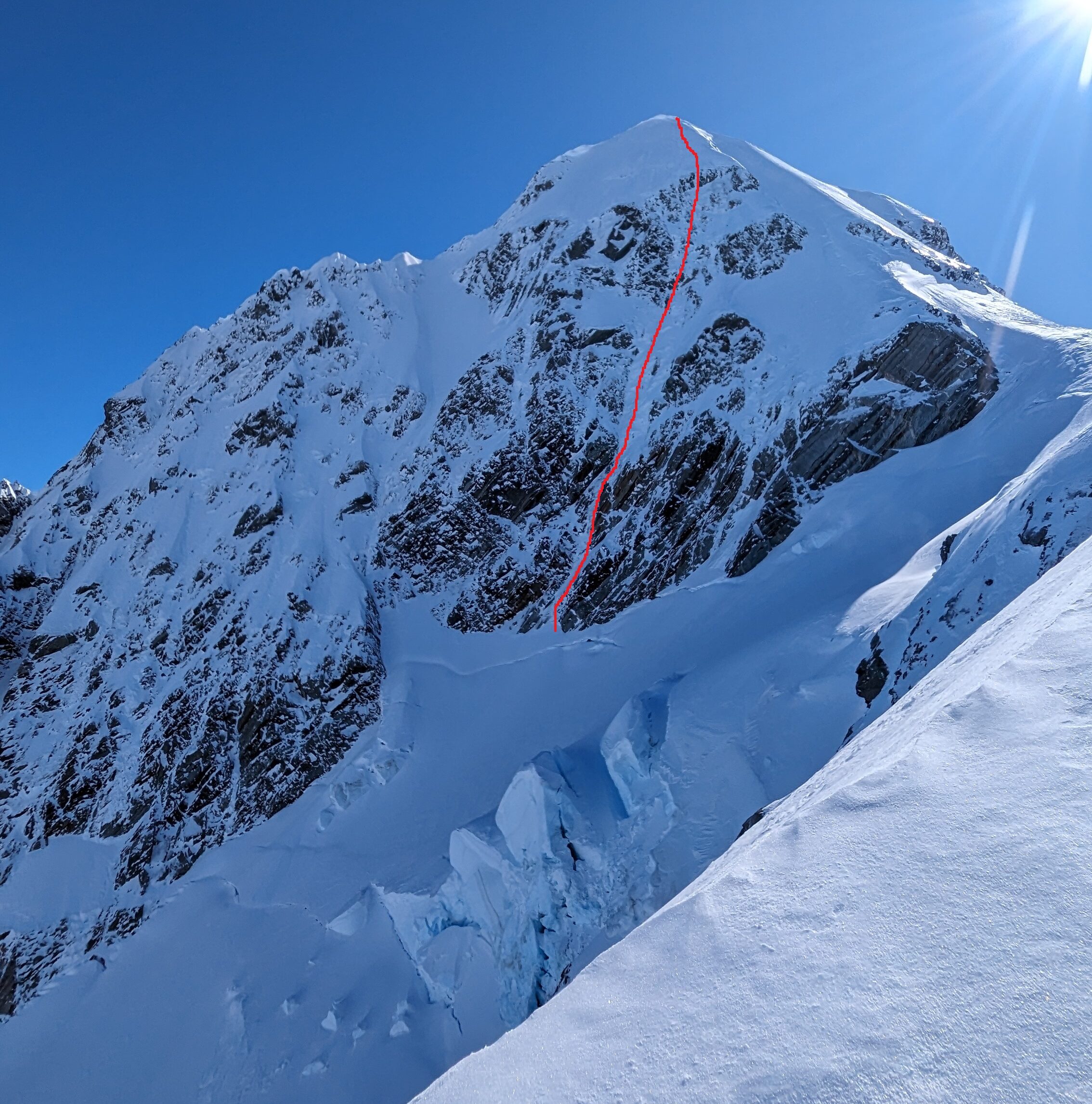
For Justin and me, though, the route represented something much bigger than simply another day out. Putting up a new route in Aoraki National Park had been something we’d both wanted to do for a long time. To do it in winter, on an alpine peak, was a genuine bucket-list objective.
It felt like a culmination of a lot of what I’d been working towards as an alpinist.
We’d spent the previous seasons building fitness, skills and experience, and suddenly we were standing underneath a line we’d never seen formed before, climbing it in good conditions and putting our own route into the mountains.
There was something so complete about the whole trip. The perfect weather, classic ice climbing, a summit in beautiful evening light, deep powder skiing, good people in the huts, and finally a new route.
A pretty good way to spend five days in the high places I love.