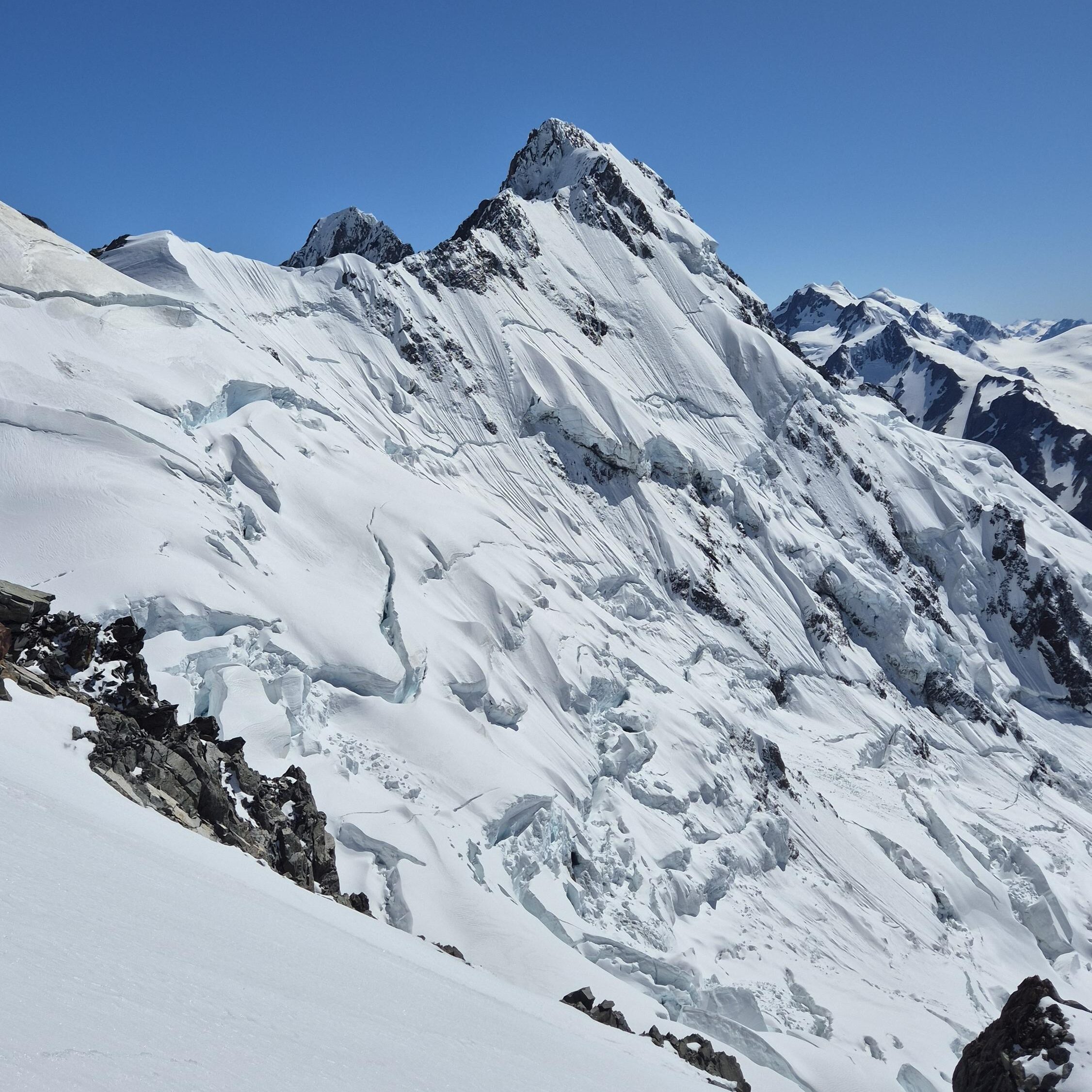
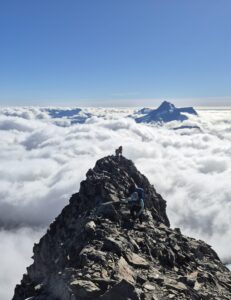
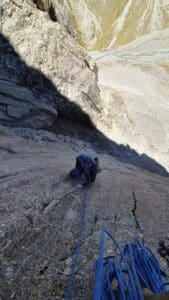
Mt Dixon had never really been a peak that sat particularly high on my hit list. I’d heard people talk about it, but I hadn’t given it much thought and certainly wasn’t aspiring to climb it anytime soon.
That changed in the first months of 2026 when I climbed it as a client on a guide’s course for my friend Brendan, who was working towards his final guiding certification. I got the “top-rope treatment” on Mt Dixon.
Brendan was leading the route as part of his assessment, Dean was the assessor, and I was the faux client. It was an interesting experience being on the other side of the guiding equation, following rather than leading and being able to watch the process from a client’s perspective. We left the hut around sunrise as a party of three.
The first challenge was the lower rock step, where the winter’s snow had retreated and left the bergschrund only just viable. We’d even dragged a ladder across with us as a hedge against the schrund proving impassable. Apparently, previous parties had needed it to get through this section. In the end, we didn’t.
We hurried across a small snow bridge and Brendan led up the rock step, around M3+ to M4, before gaining the steep snow slopes above. The conditions on the snow were good, and we made steady progress towards the ridge.
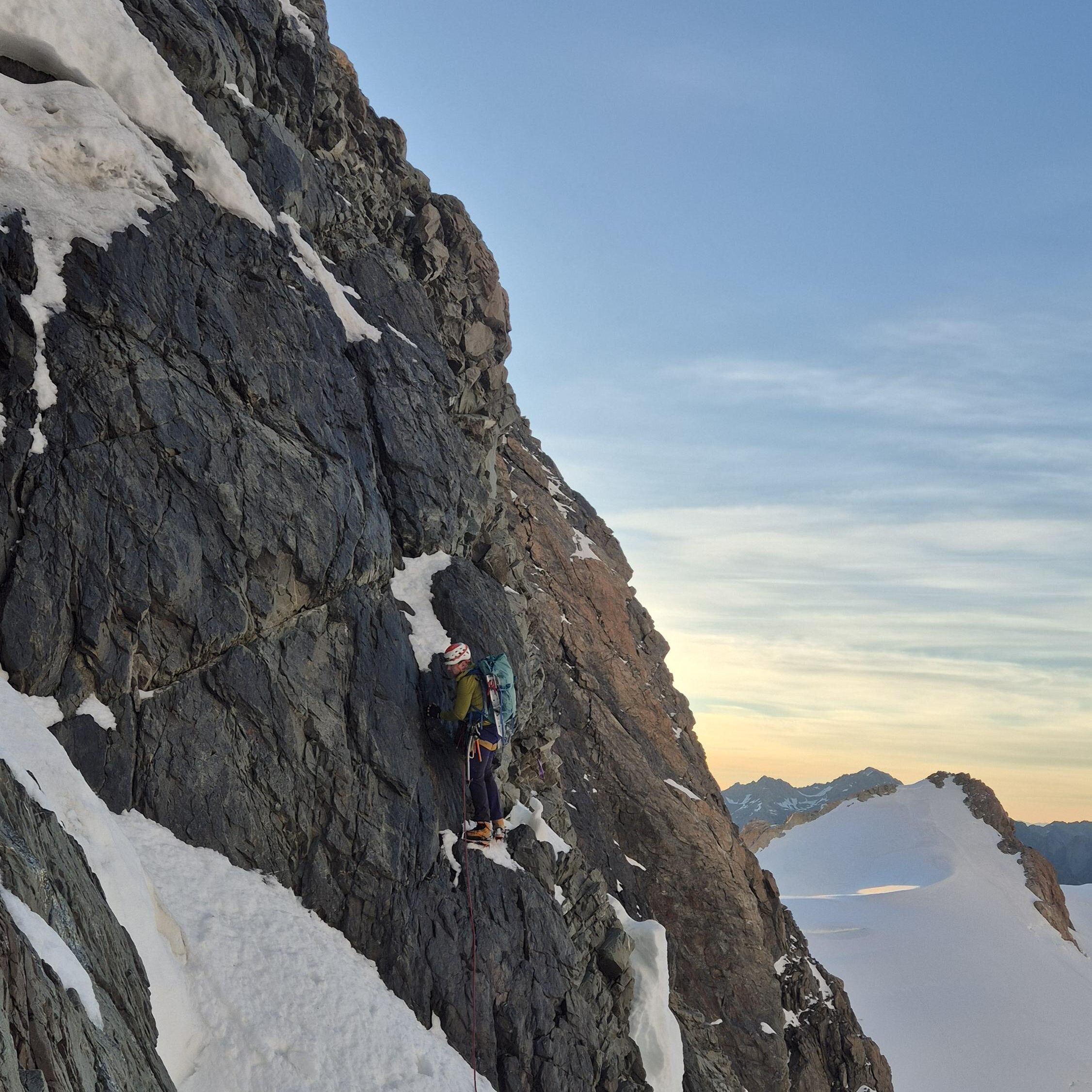
The climbing itself wasn’t particularly demanding. All three of us were experienced and competent mountaineers, and the steep snow, around 50 degrees, was simply good travel.
There were a few pitches of daggering as we climbed higher, but the ridge was mainly straightforward cramponing. After an hour or two of this, we reached the final summit slopes.
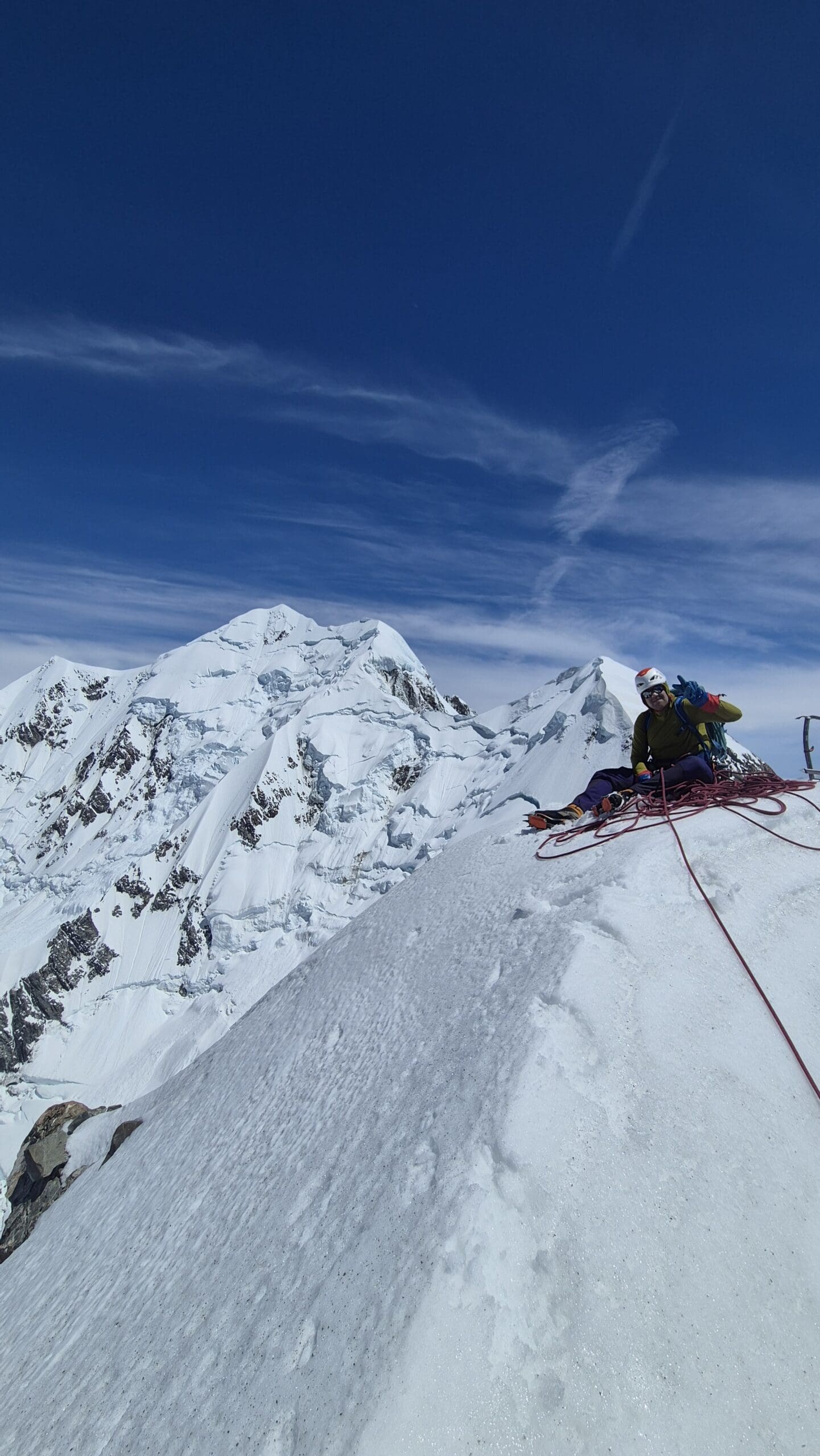
The terrain steepened into once last exposed traverse and then onto a narrow, knife-edge snow arete. Technically, the climbing wasn’t particularly difficult, but it was a noticeable change in exposure from everything that had come before. Easy moves suddenly felt significantly more consequential, with steep ground falling away on either side.
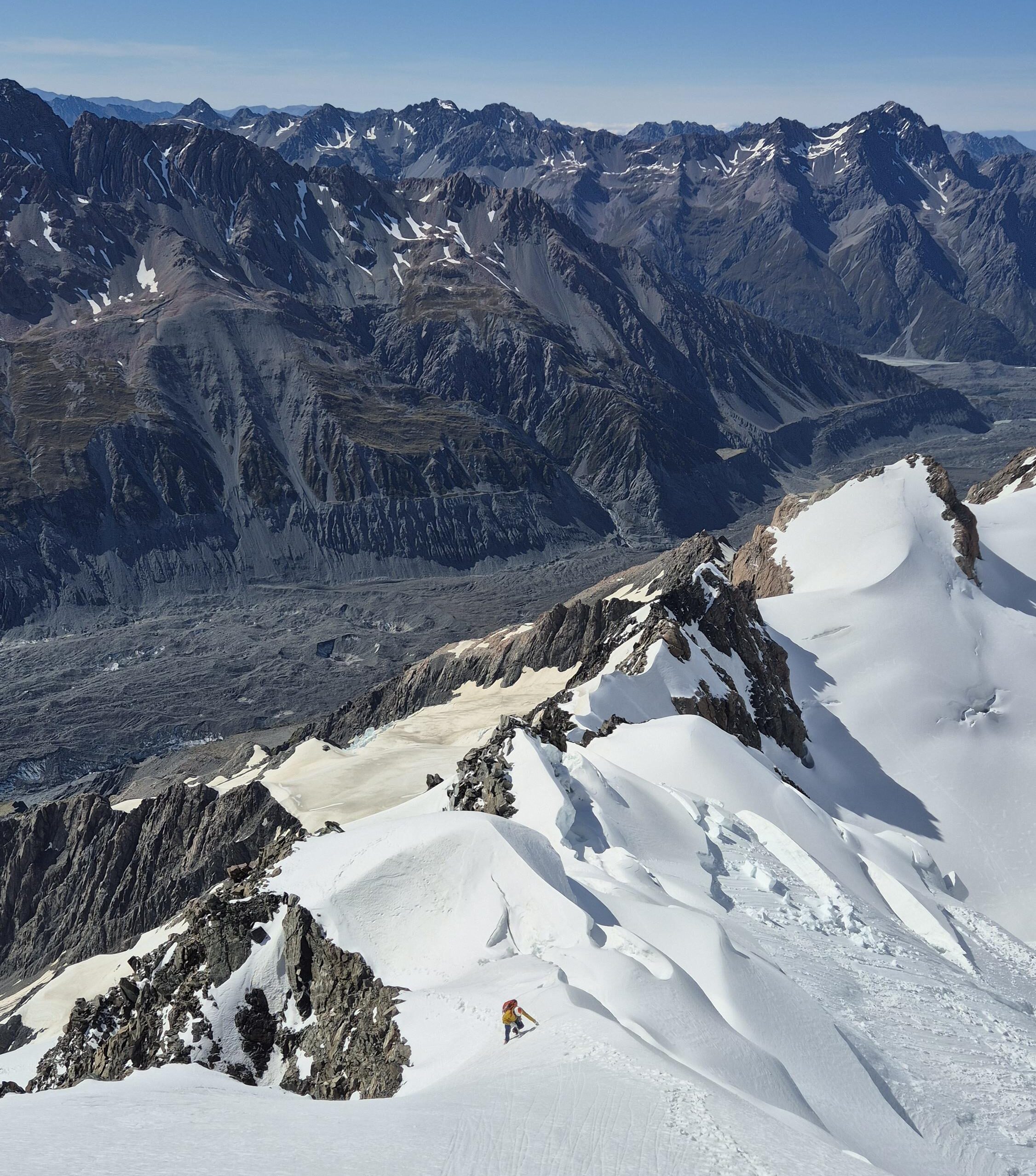
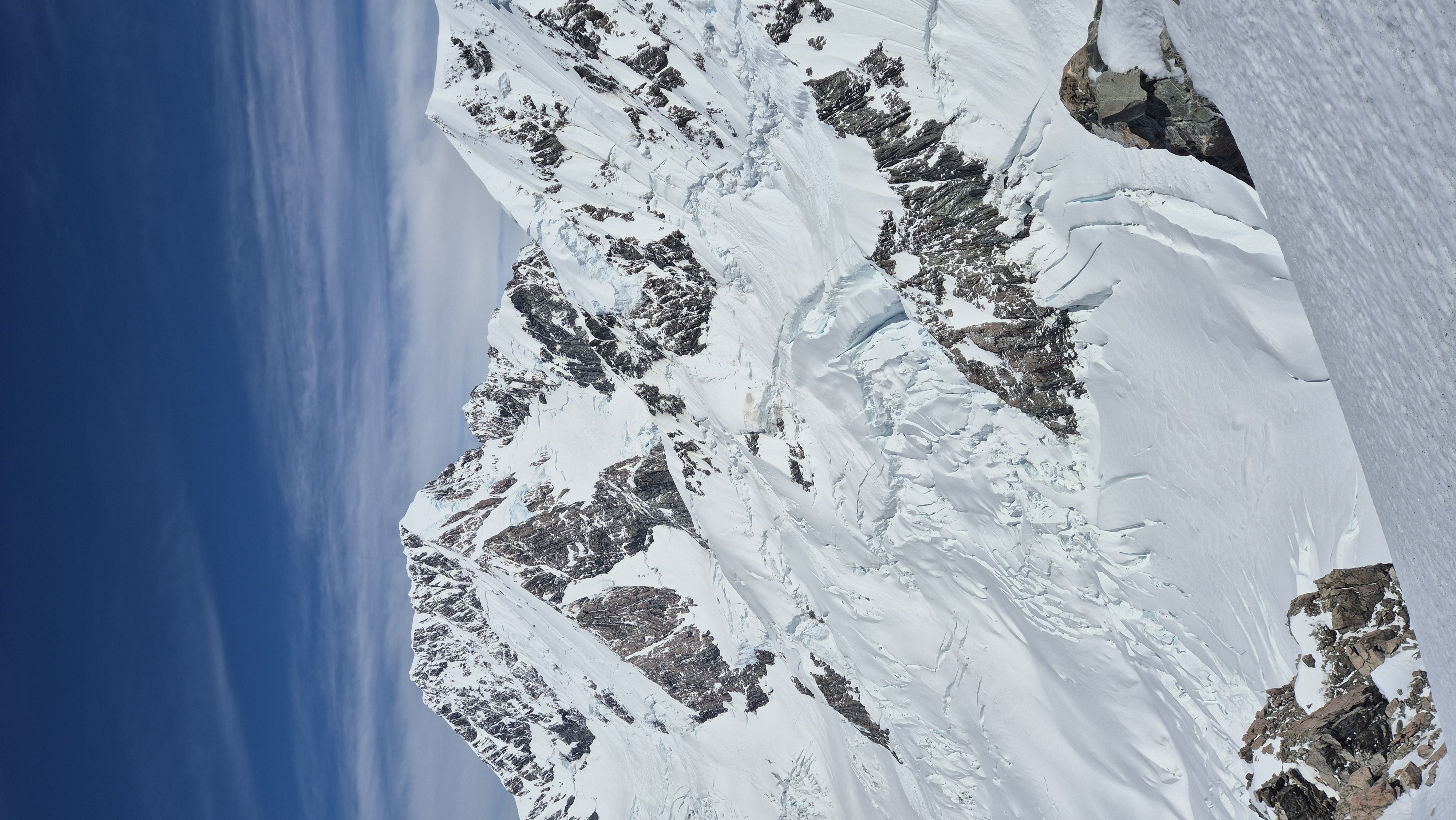
It was a fitting culmination to the climb. From the arete, we made our way onto the summit, where the reward was an incredible panorama across the Southern Alps.The Grand Plateau stretched out below, with Aoraki and Mt Tasman dominating the skyline.They looked magnificent from that perspective and definitely planted a few ideas.
There were also incredible views down into the Tasman Glacier and across towards the east face of Haidinger.
It took us around eight hours to reach the summit, followed by another four or five hours to descend. The descent involved a number of rappels and a little route-finding between the various stations, but we eventually made our way back down without too much fuss. Overall, Mt Dixon turned out to be a fantastic climb.
It might not get talked about as much as some of its much larger neighbours, with Aoraki and Mt Tasman naturally attracting much of the attention, but Dixon deserves plenty of consideration in its own right. A classic warm-up to the larger 3000’ers.
It’s got glacier travel, steep snow, a little sprinkling of technical rock, lots of exposure and a spectacular summit. For me, it was a good reminder that some of the best objectives aren’t necessarily the ones sitting highest on your list. Also, well done to Brendan who achieved his IFMGA badge, in big part, as a result of his performance on this day.