Mt Dixon had never really been a peak that sat particularly high on my hit list. I’d heard people talk about it, but I hadn’t given it much thought and certainly wasn’t aspiring to climb it anytime soon.
That changed in the first months of 2026 when I climbed it as a client on a guide’s course for my friend Brendan, who was working towards his final guiding certification. I got the “top-rope treatment” on Mt Dixon.
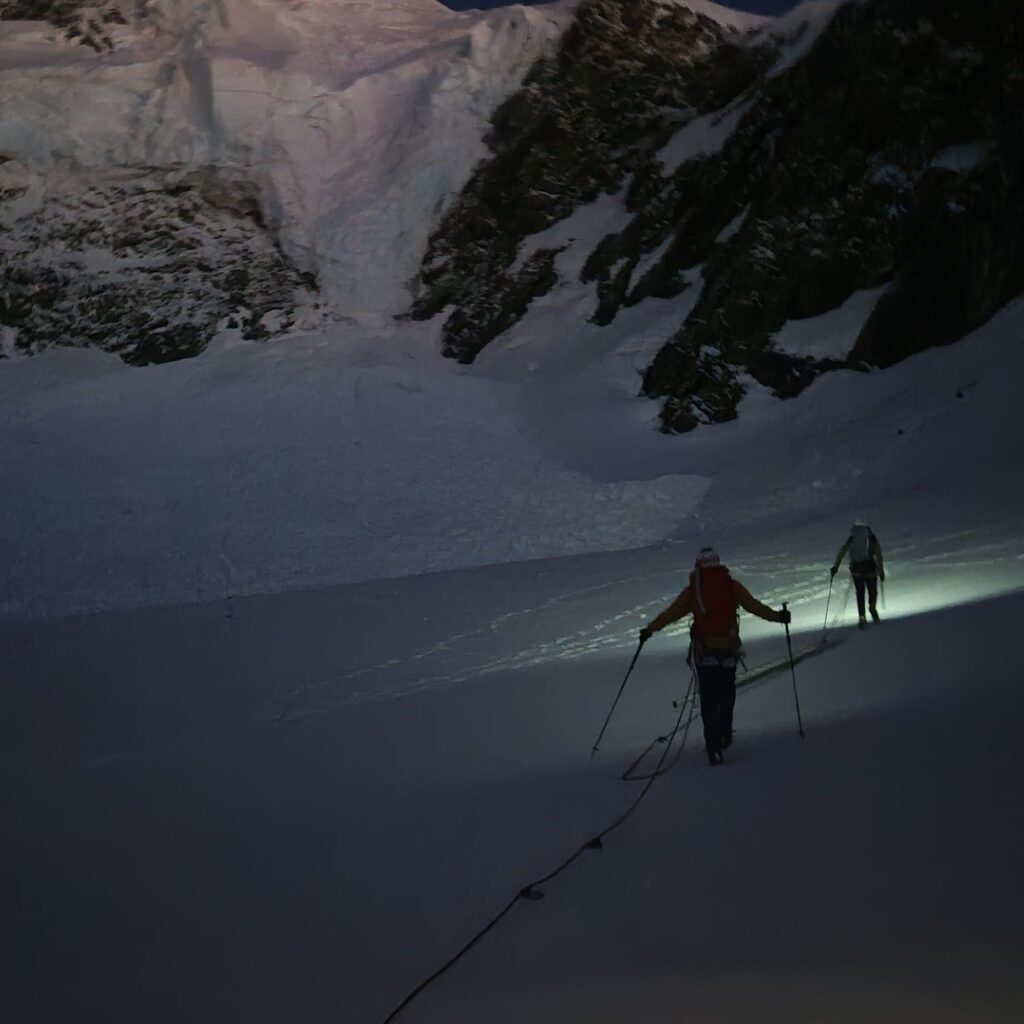
Brendan was leading the route as part of his assessment, Dean was the assessor, and I was the faux client. It was an interesting experience being on the other side of the guiding equation, following rather than leading and being able to watch the process from a client’s perspective. We left the hut around sunrise as a party of three.
The first challenge was the lower rock step, where the winter’s snow had retreated and left the bergschrund only just viable. We’d even dragged a ladder across with us as a hedge against the schrund proving impassable. Apparently, previous parties had needed it to get through this section. In the end, we didn’t.
We hurried across a small snow bridge and Brendan led up the rock step, around M3+ to M4, before gaining the steep snow slopes above. The conditions on the snow were good, and we made steady progress towards the ridge.
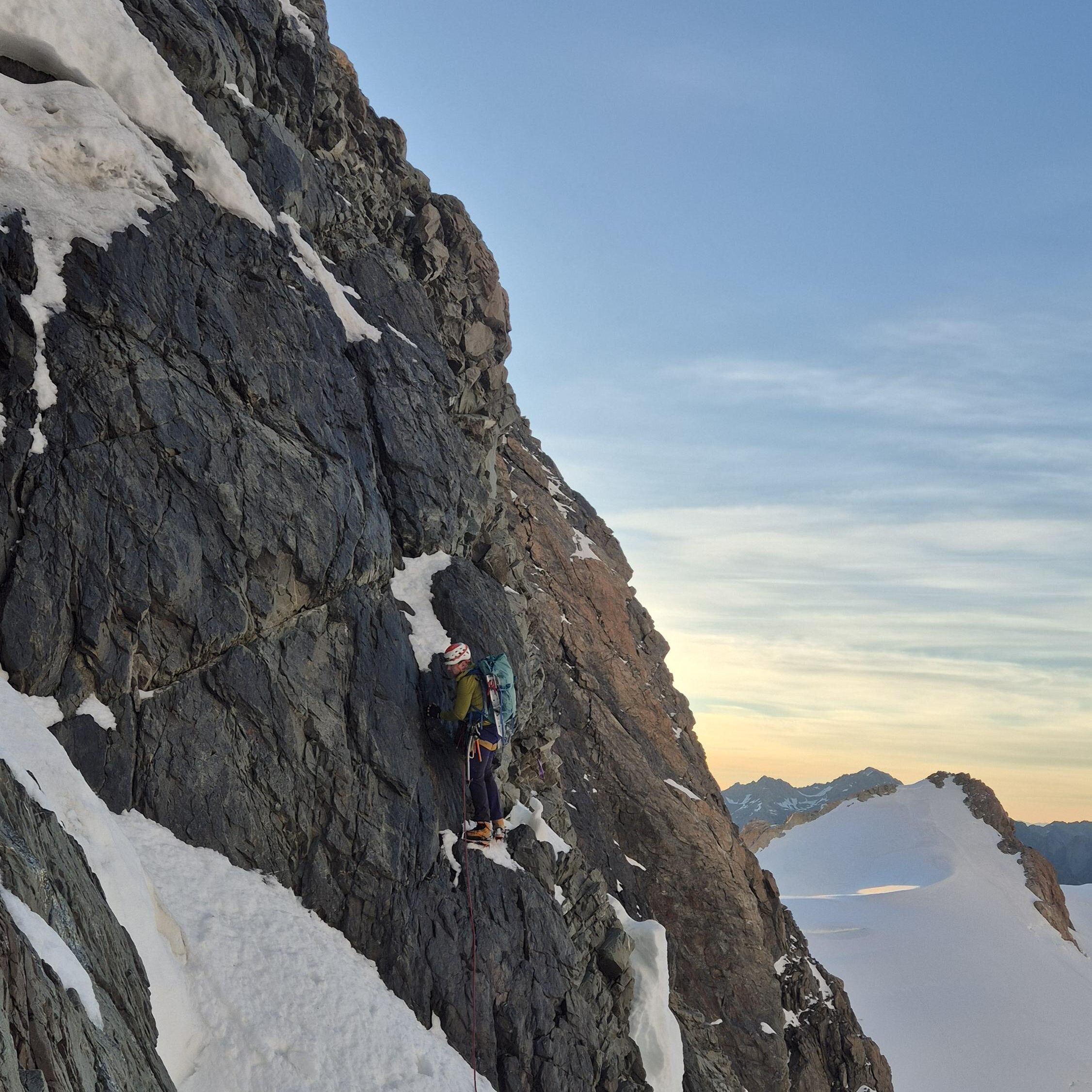
The climbing itself wasn’t particularly demanding. All three of us were experienced and competent mountaineers, and the steep snow, around 50 degrees, was simply good travel.
There were a few pitches of daggering as we climbed higher, but the ridge was mainly straightforward cramponing. After an hour or two of this, we reached the final summit slopes.
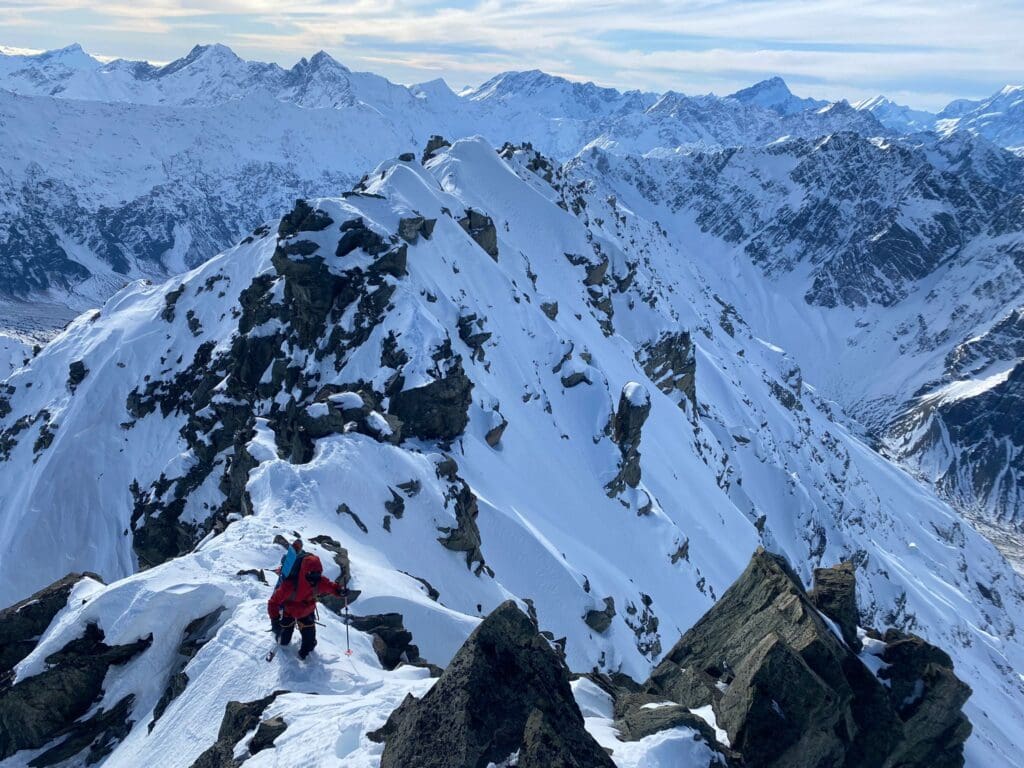
The terrain steepened into once last exposed traverse and then onto a narrow, knife-edge snow arete. Technically, the climbing wasn’t particularly difficult, but it was a noticeable change in exposure from everything that had come before. Easy moves suddenly felt significantly more consequential, with steep ground falling away on either side.
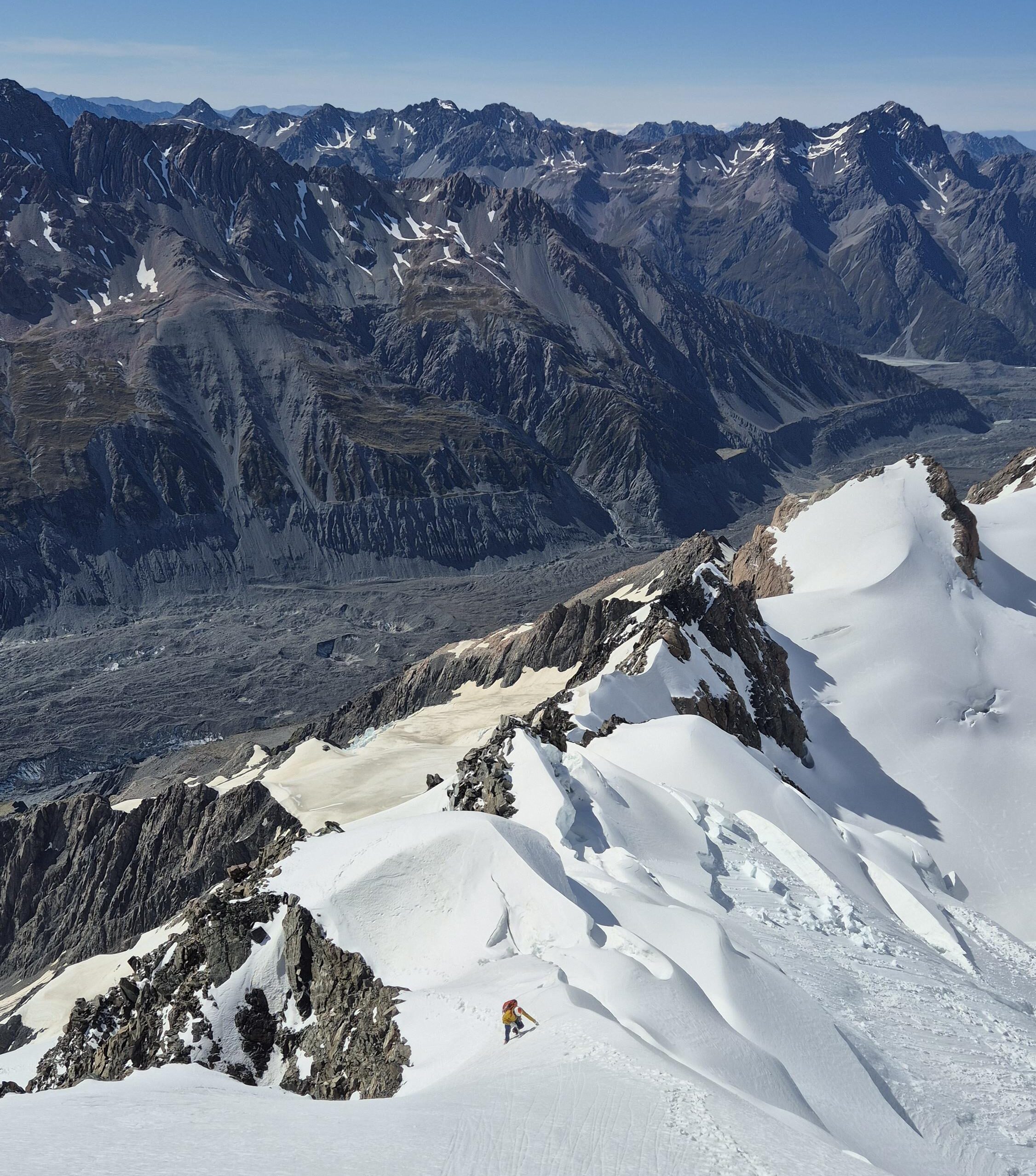
It was a fitting culmination to the climb. From the arete, we made our way onto the summit, where the reward was an incredible panorama across the Southern Alps.The Grand Plateau stretched out below, with Aoraki and Mt Tasman dominating the skyline.They looked magnificent from that perspective and definitely planted a few ideas.
There were also incredible views down into the Tasman Glacier and across towards the east face of Haidinger.
It took us around eight hours to reach the summit, followed by another four or five hours to descend. The descent involved a number of rappels and a little route-finding between the various stations, but we eventually made our way back down without too much fuss. Overall, Mt Dixon turned out to be a fantastic climb.
It might not get talked about as much as some of its much larger neighbours, with Aoraki and Mt Tasman naturally attracting much of the attention, but Dixon deserves plenty of consideration in its own right. A classic warm-up to the larger 3000’ers.
It’s got glacier travel, steep snow, a little sprinkling of technical rock, lots of exposure and a spectacular summit. For me, it was a good reminder that some of the best objectives aren’t necessarily the ones sitting highest on your list. Also, well done to Brendan who achieved his IFMGA badge, in big part, as a result of his performance on this day.
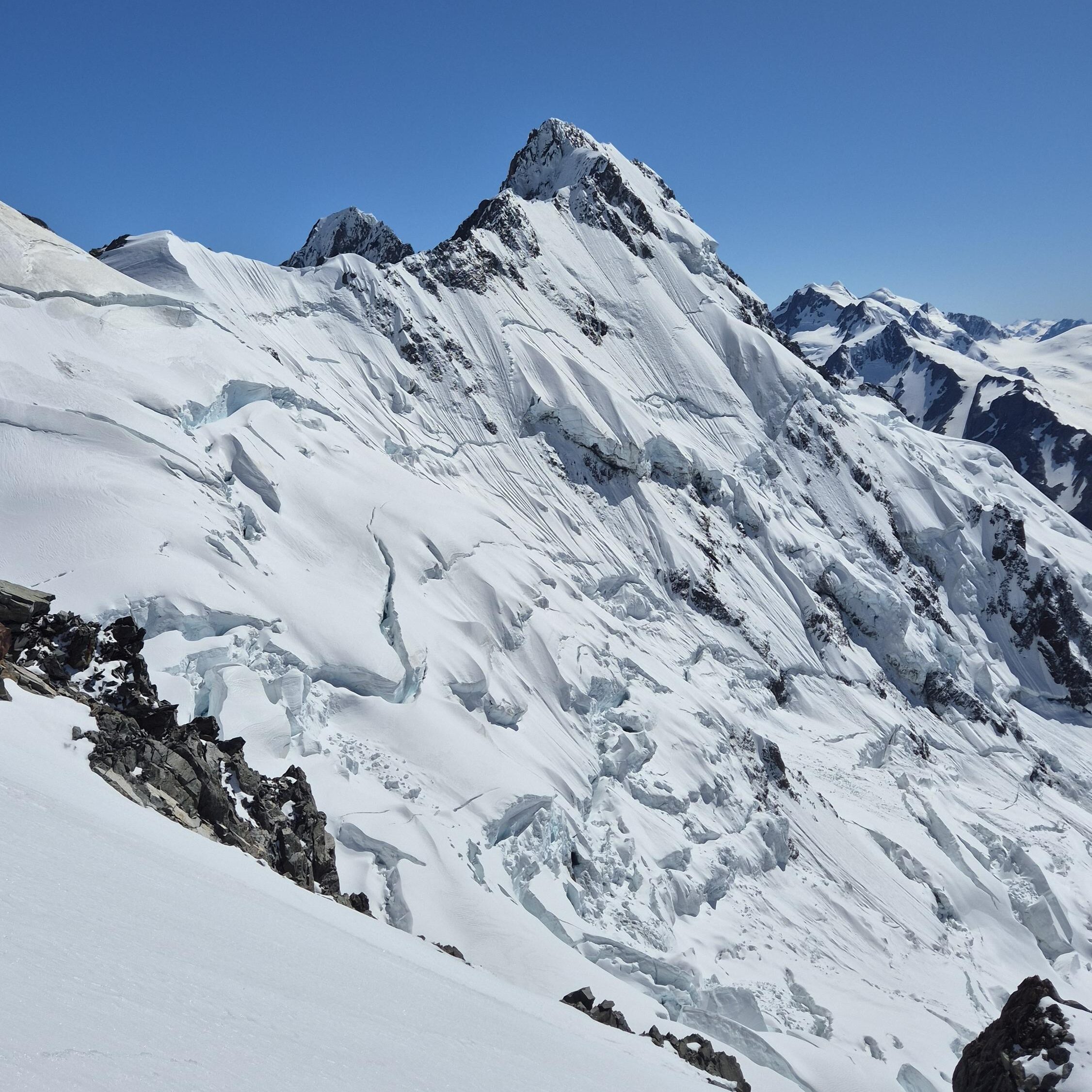
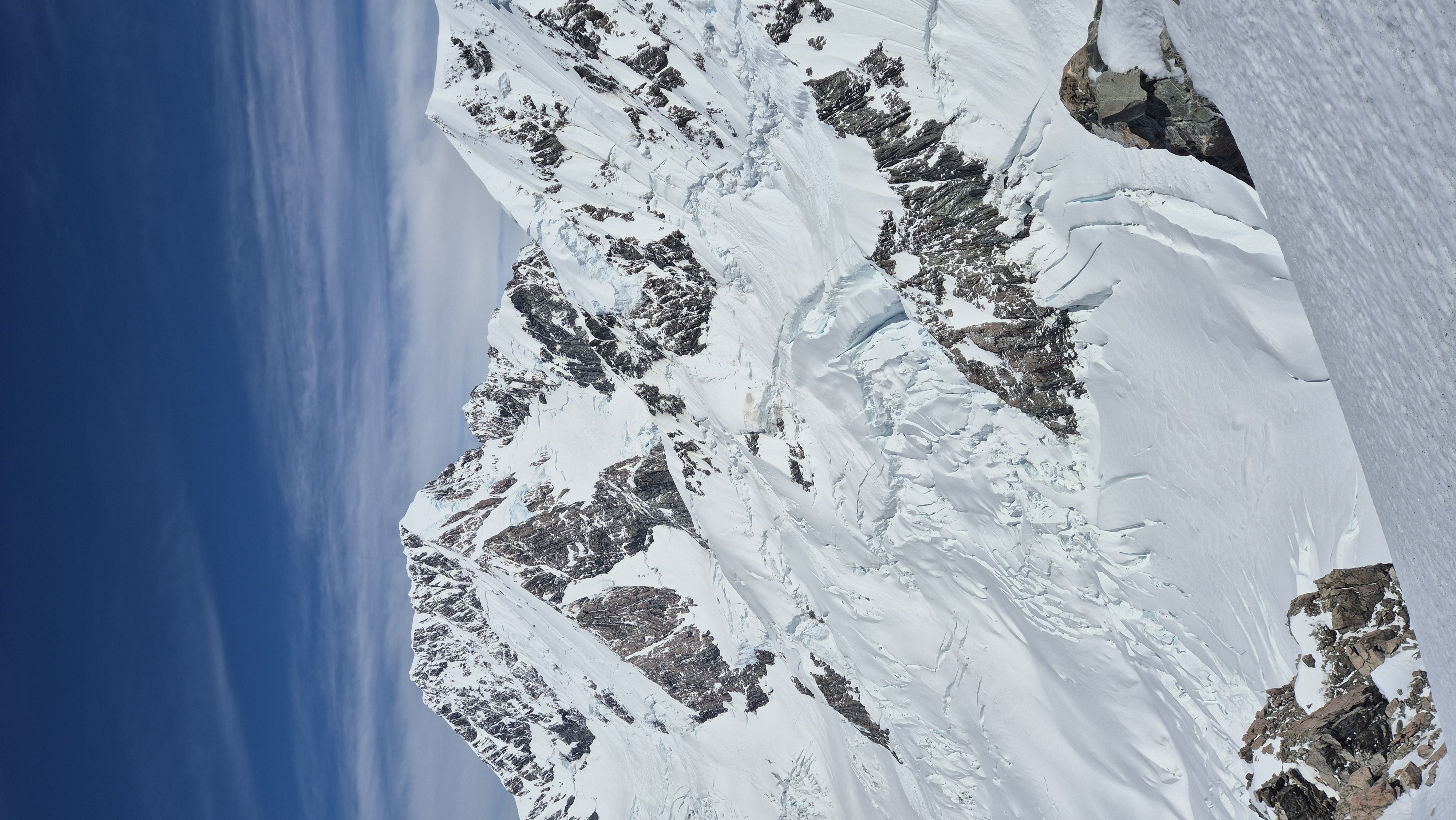
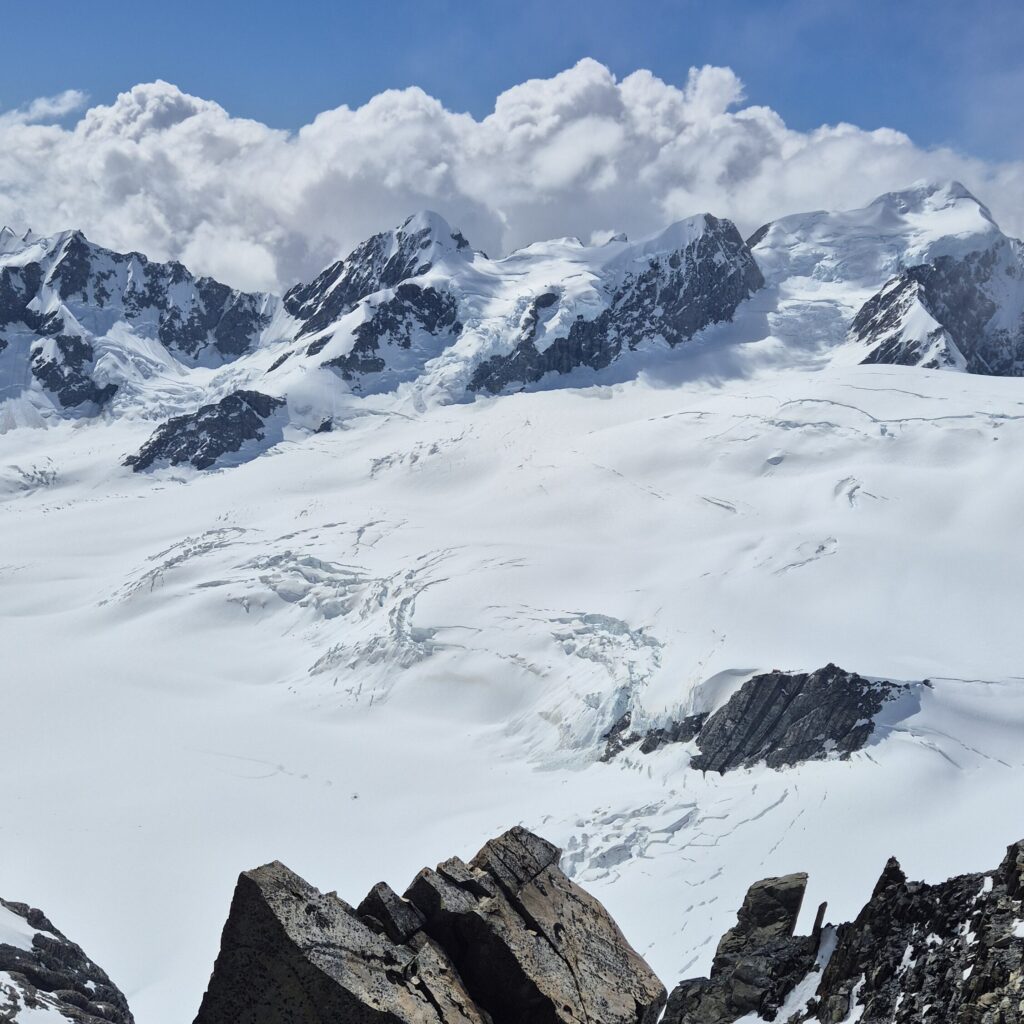
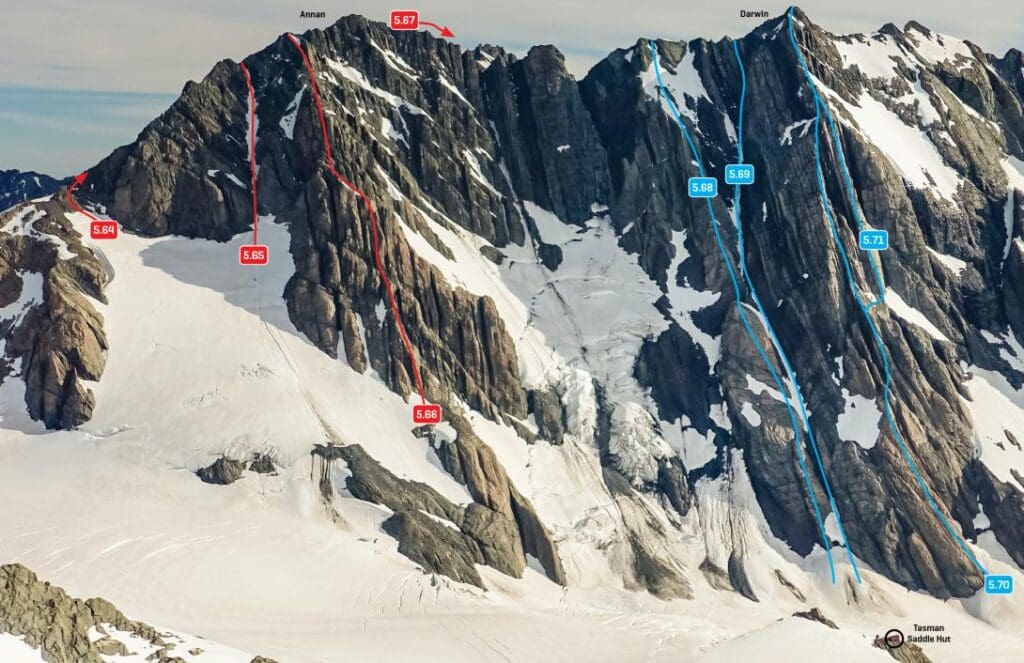
Mt Annan had been on my radar for a while. Viewed from the Tasman Glacier, it has an imposing presence, a massive sweep of rock, with ramparts running from top to bottom. I’d always wanted to see what the view looked like from up there.
The trip started as a mission to Kelman Hut, although we weren’t sure how much the weather would allow us to do. We were also dealing with a high freezing level, so we expected the snow conditions to be soft and punchy. That meant travel on the glacier was likely to be slow and probably pretty limited.
We flew in late one afternoon, but the pilot wasn’t able to get us all the way to Kelman Hut. Low cloud was hanging around, there was very little wind to move it. The pilot, with some skill, managed to get us to within about 300 metres vertical of the hut. From there, we had to drag our gear uphill to the hut. It was hot, sweaty work in the still conditions.
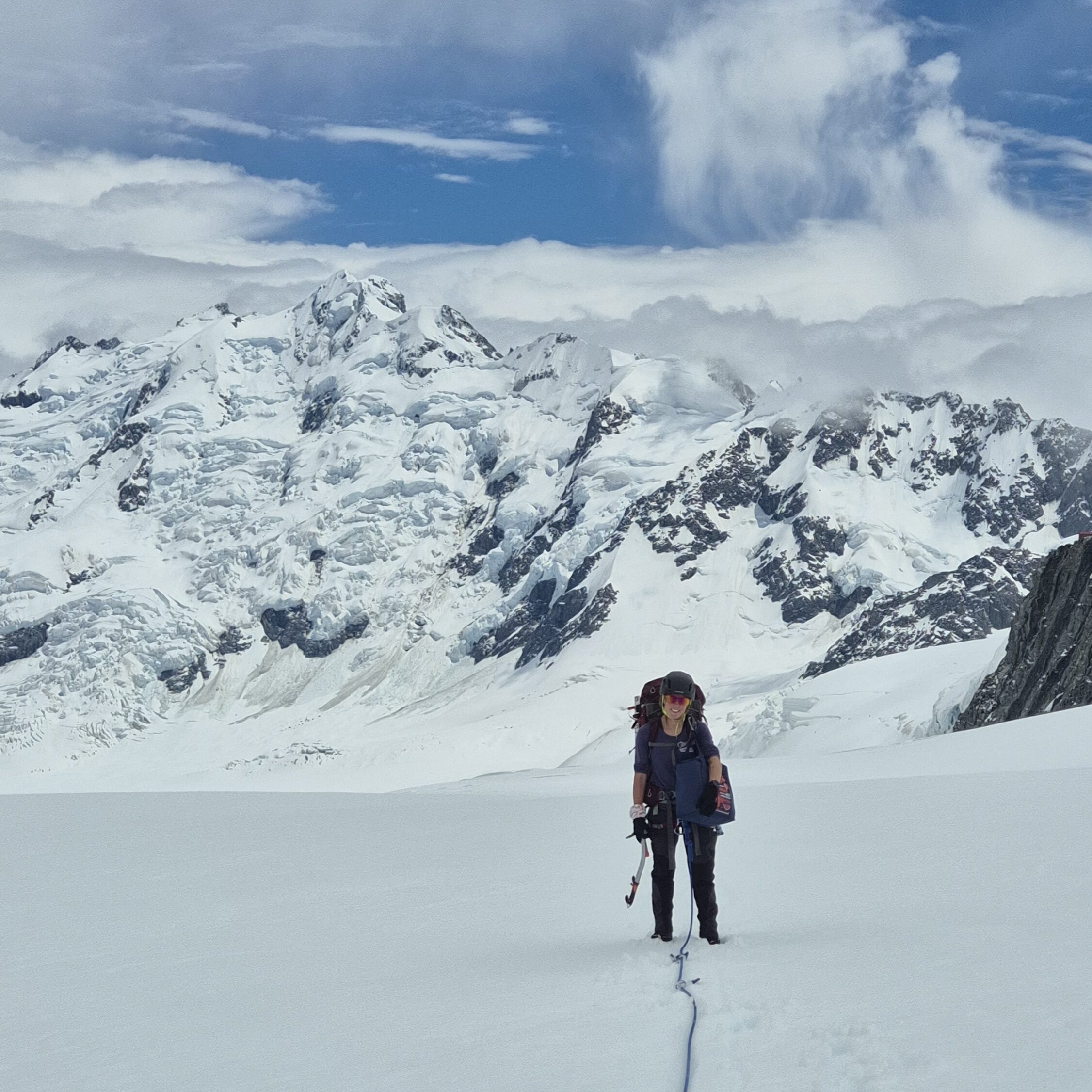
Once we’d dropped our bags, we headed out for a quick recce towards Red Buttress on Mt Abel to get a feel for the conditions. The snow was certainly punchy, but the bergschrund was passable. We climbed a couple of pitches up to warm into the trip, before bailing off.
The following morning we woke to light drizzle, with clouds moving slowly across the head of the Tasman. Rather than committing to an early start, we postponed things and spent some time outside working on anchors and crevasse rescue skills. It was particularly useful for Jess, as it was her first time travelling on a glacier.
As the weather started to improve, we headed back out towards ‘Red Buttress’. The base of which is a mere 200m from the hut door.
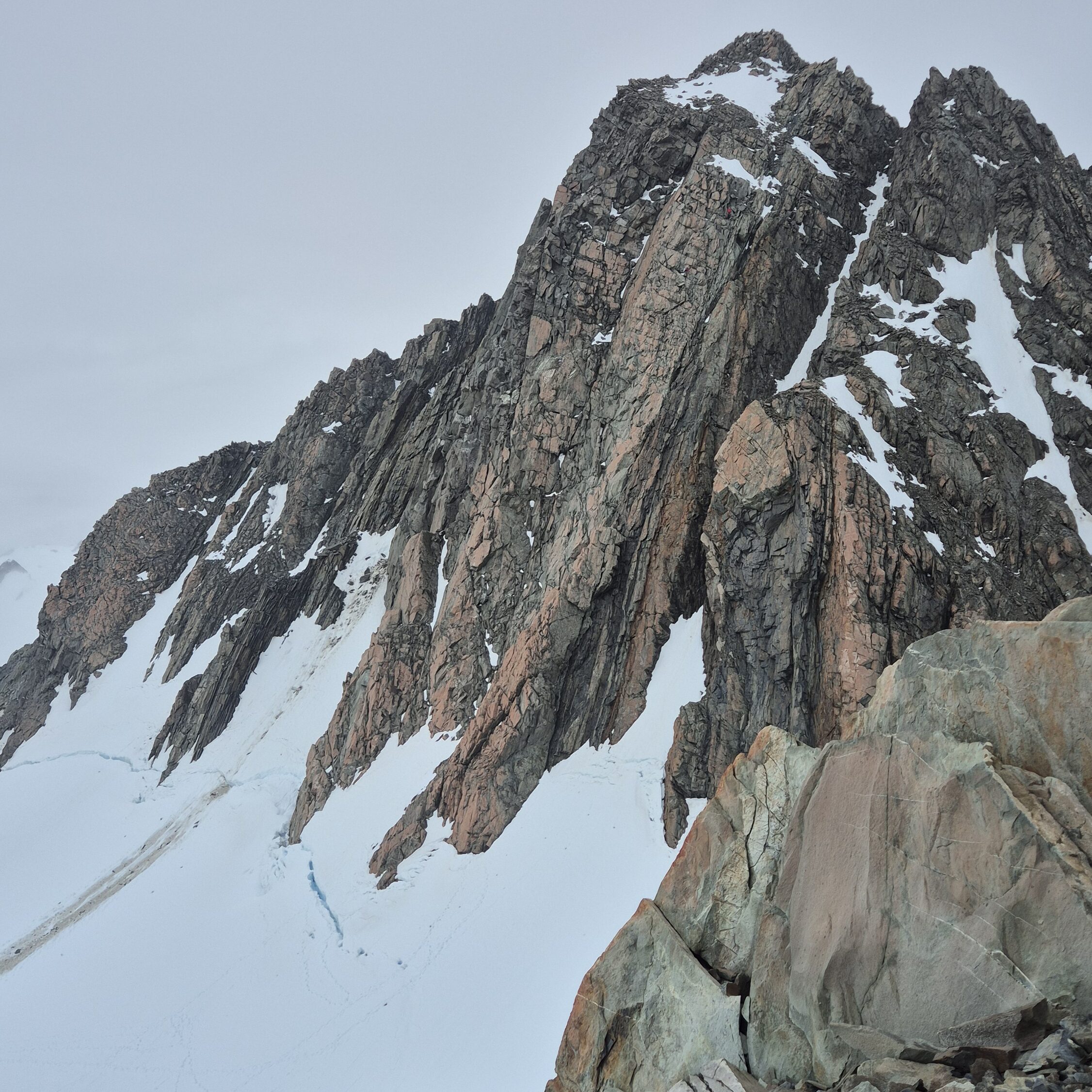
The climb involved around five pitches of mainly scrambling, with the occasional trickier move. It was a pleasant route and had some great views from the top. To think only a stone’s throw from the shelter of the hut.
We rappelled back down, returned to the hut for lunch and a quick refresh, then headed straight back out.
Mt Kain was the next objective, only around 400 metres from the hut. We climbed a steep snow slope to the bergschrund, made a tricky little step across it and established ourselves at the base of ‘Zero Politics’.
The route gave us two or three really good pitches of rock climbing around Grade 16, on lovely featured orange greywacke. The corner pitch at the top is awesome! The descent is the same way you come.
It was another rewarding little route and a fun way to finish the day. We were back at the hut before dark, and over dinner started thinking seriously about the following day.
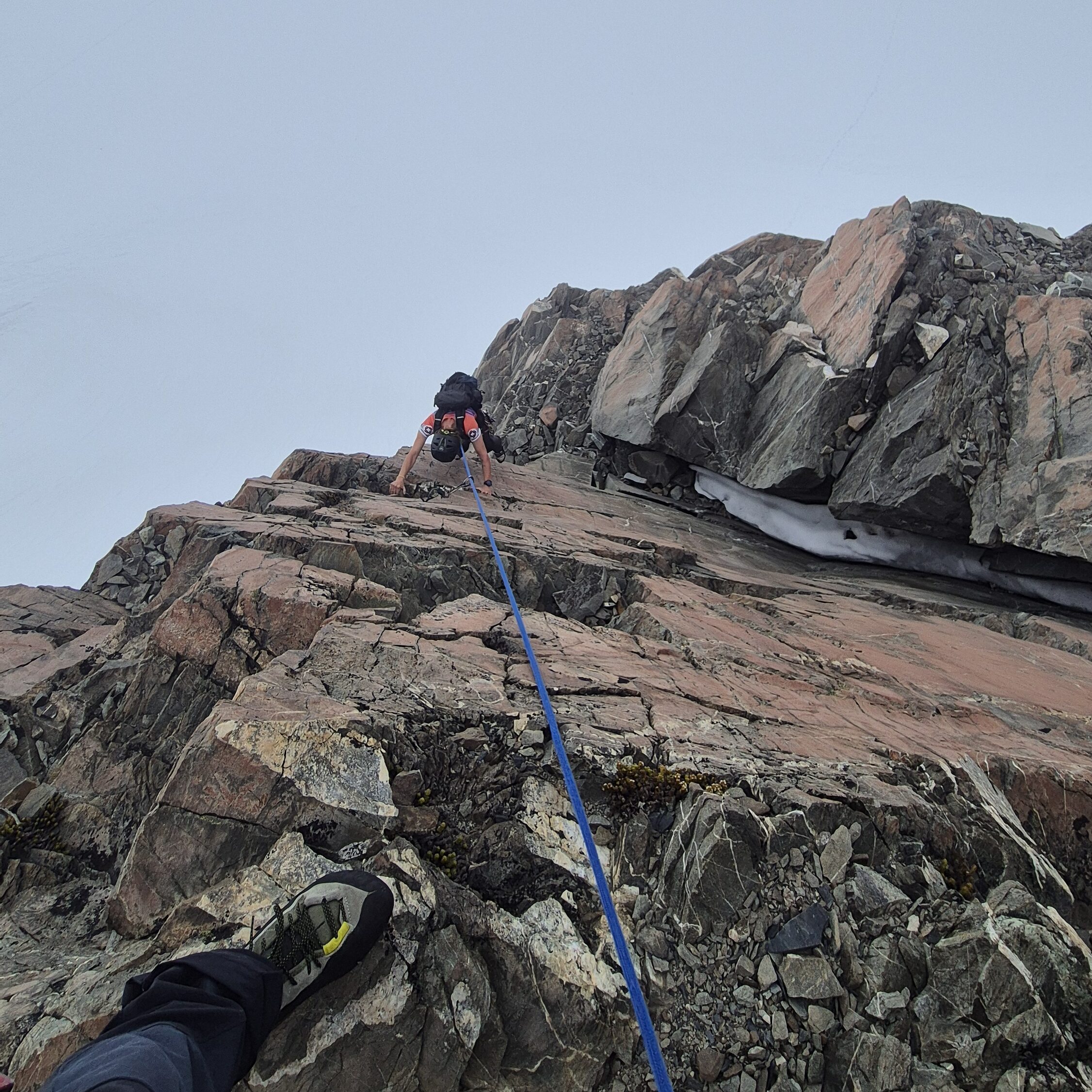
Mt Annan was the objective.
We had planned to make a concerted push for the summit, but there was still plenty of uncertainty around the route. I was confident we’d get close, but I wasn’t assured that we’d reach the top easily.
The high freezing level remained the main concern. We didn’t want to spend the day travelling through snow-covered terrain without a refreeze, so the plan was to stay on rock wherever possible.
We left early, making our way down the glacier by moonlight.
As dawn arrived, we started plodding up the large snow slope. After about 400m vertical we arrived at the base of the ridge. The snow was exactly as expected, soft and punchy. Jess put in a great shift putting steps up the slope. In most places we were punching through to our calves or knees.
By around 9am we reached the base of the ridge and took a short break.
From there, the character of the day changed.
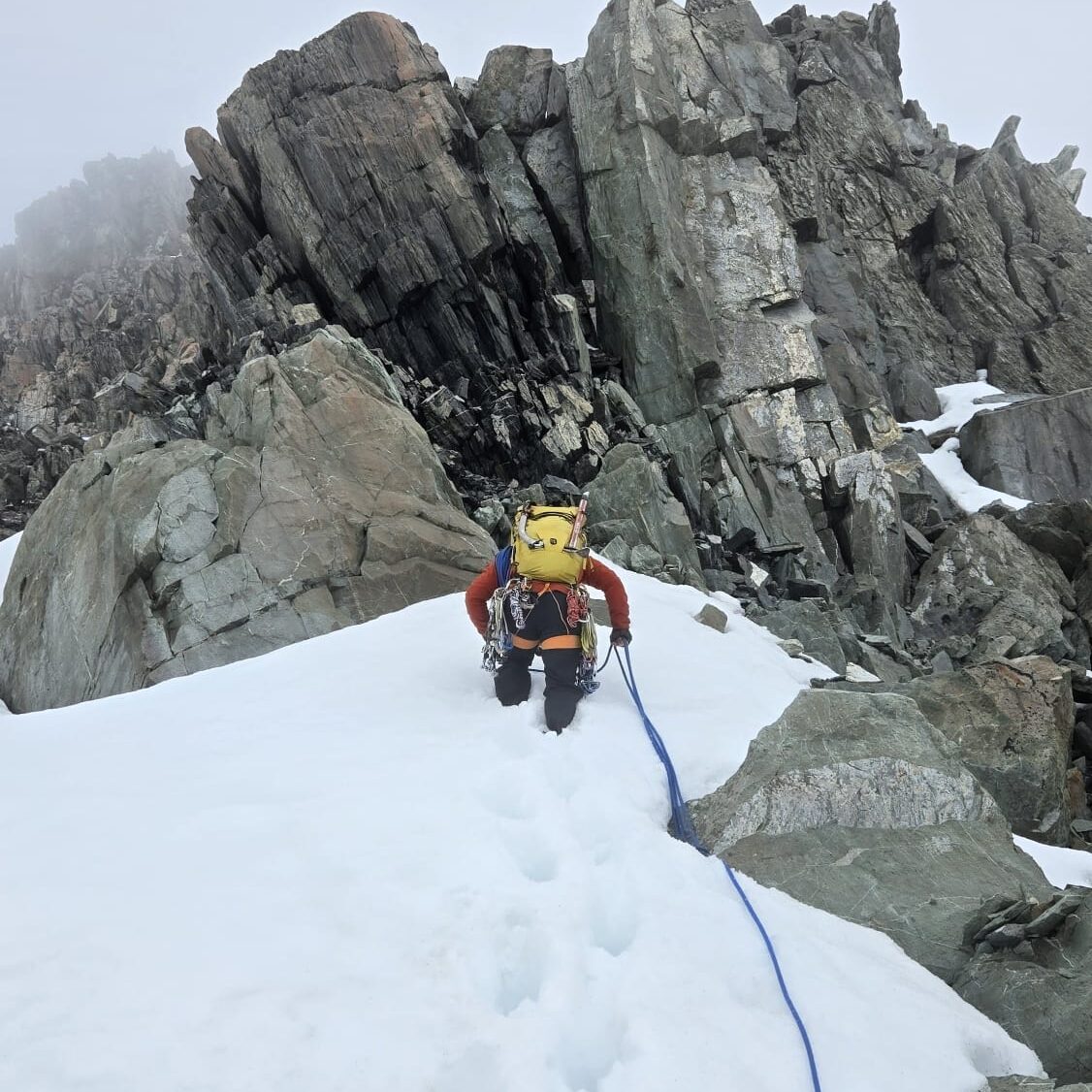
The climbing itself wasn’t particularly difficult, but it was exposed and the rock was consistently poor. That meant one could never quite relax as much. Every movement needed to be deliberate and intentional, every foot and hand hold well inspected. The difficulty wasn’t necessarily in the individual climbing moves, it was in maintaining a high level of focus for hours at a time on terrain where you didn’t want anything to break.
It was the sort of climbing where you only really relaxed once you stopped.
I did a lot of short pitching, combined with sections of simul-climbing. Route finding was mostly straightforward once I’d worked out the natural lay of the land.
The rock quality, however, made for slow progress. We kept moving steadily upwards, and around five hours after leaving the base of the ridge we found ourselves roughly 20 vertical metres below the summit. The summit itself sits perched on top of a steep, vertical block. Cracked and fractured. A few different options exist.
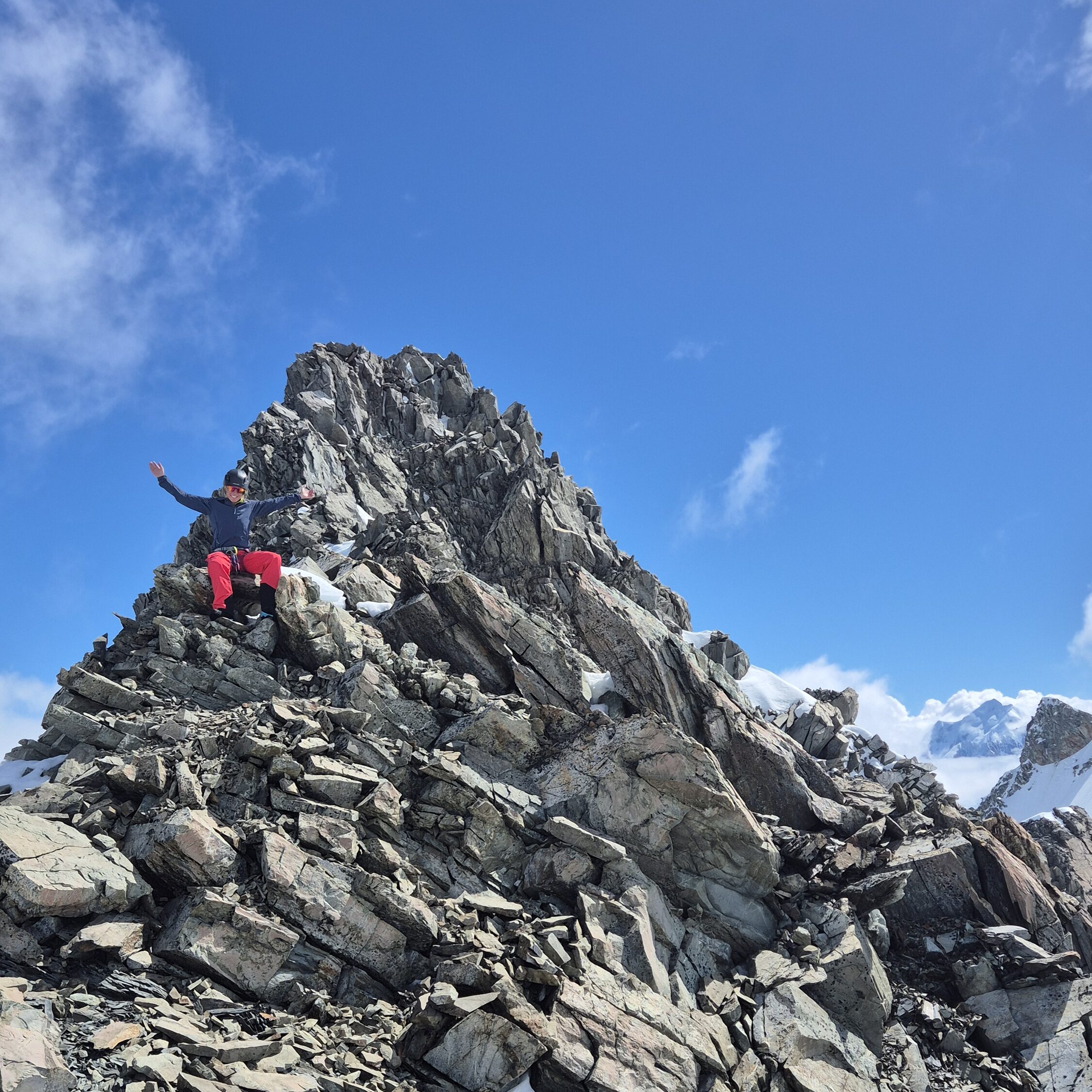
By this point, though, I was conscious that I had been doing all the leading and route finding. I needed to save some mental energy for the descent. The final section just seemed like it would take more effort than it was worth.
We’d already had a great day, we’d climbed high enough to get an excellent perspective of the surrounding mountains, and the weather was improving. Rather than pushing on simply to stand on the highest point, we decided to stop and enjoy where we were. And the view was exactly what I’d hoped for.
After taking some time to enjoy the vista, we started the descent. It took around three hours, including two rappels, and required just as much concentration as the ascent. The loose rock meant we had to remain deliberate all the way down. Knowing the way certainly alleviated a lot of decision making. I do like climbing ridges for this reason. Especially before I try an ascent of the mountain’s western face. Knowing the descent is a massive advantage.
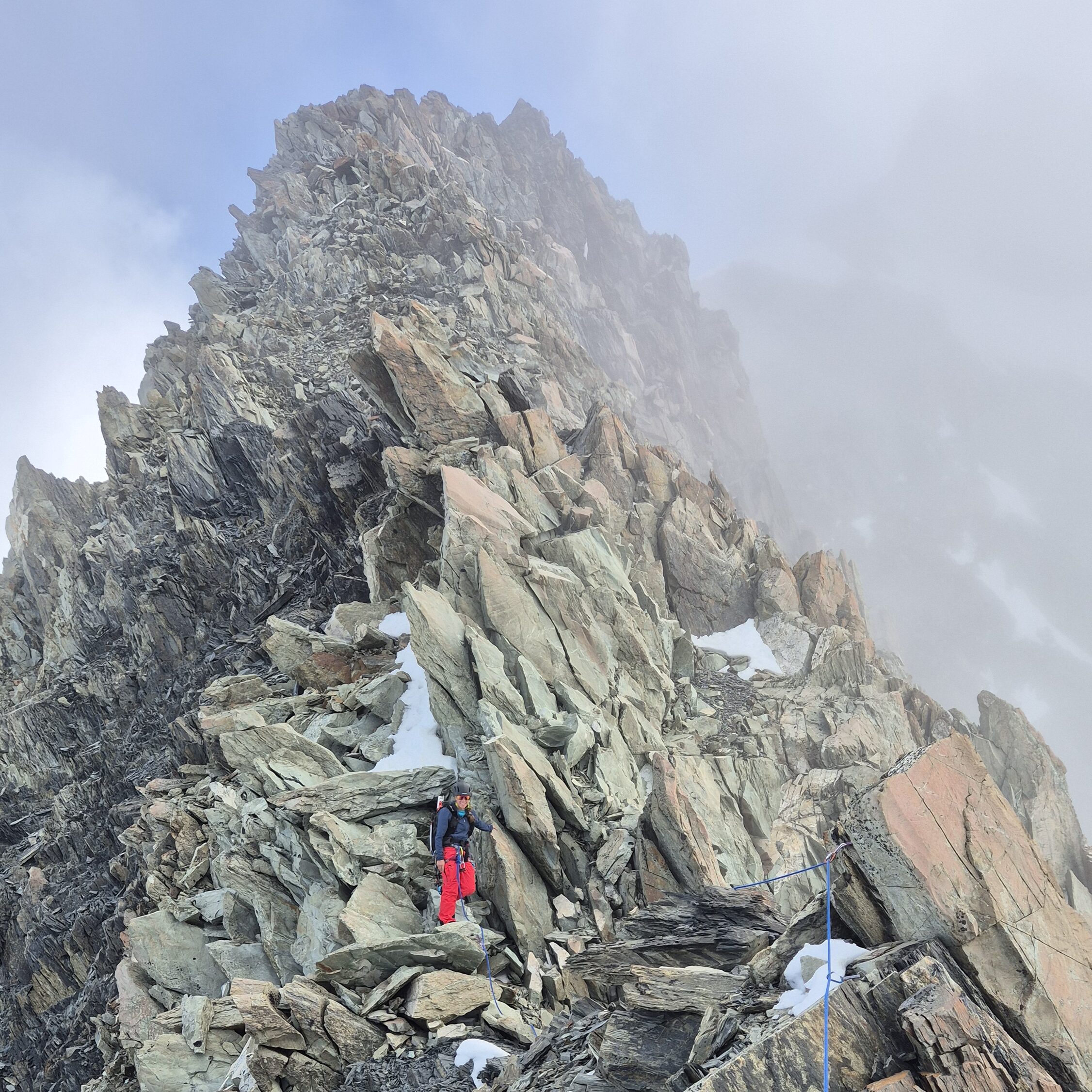
By the time we returned to the glacier, we’d had a long and enjoyable day. We were both thrilled with what we saw and climbed. The sunset and then the bright rise of a full moon over the glacier, cast displays of light and shadow that made the whole experience feel extra special. It was a wondrous atmosphere as we made our way back up the glacier to the hut.
The trip had started with a poor weather outlook, a high freezing level and questionable glacier conditions. Yet it ended with 3 great climbs.
And I’d finally got to stand high on that enormous castle wall I’d been looking at from for so long!
I can’t say I’d necessarily recommend Mt Annan unless you really like chossy ridges (I seem to have developed a bit of an affinity for them), but the mountain is striking, the views are exceptional, and the experience gave me a much better understanding of the terrain and, importantly, the descent from Mt Annan.
That knowledge will be valuable if I get the opportunity to return and climb one of the west-face rock routes.
A lot of the time, not quite reaching the summit, has no say in the overall experience of a day in these high places.
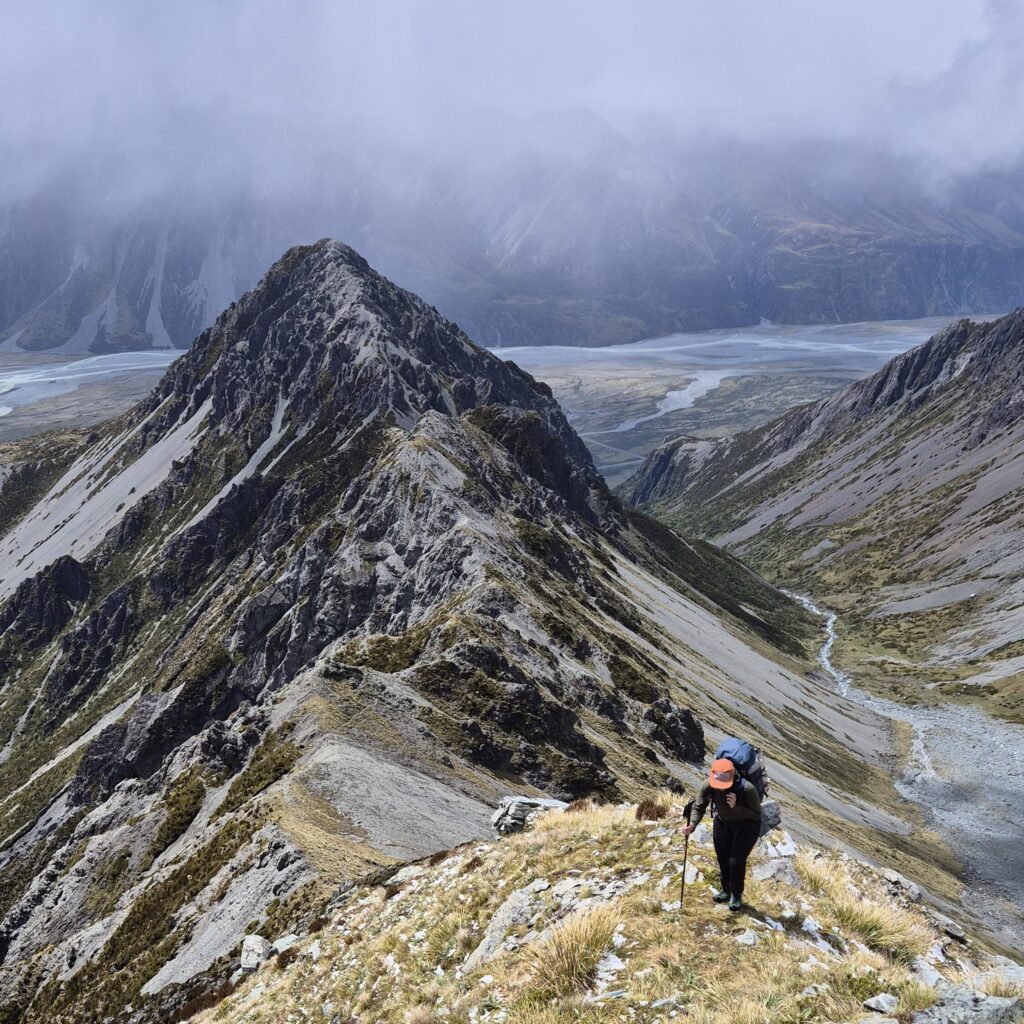
I’d wanted to climb Mt Sealy via Sebastopol Ridge for a while. The route had always appealed to me, particularly the idea of heading straight up from the village to the Annette Plateau.
Eventually, everything lined up, the right weather, a great group of people, and everyone having time off at the same time.
At the time, I was living in the village, so the trip literally started from my back door. There was something pretty satisfying about putting a pack on, walking out of the house and heading straight into the high mountains.
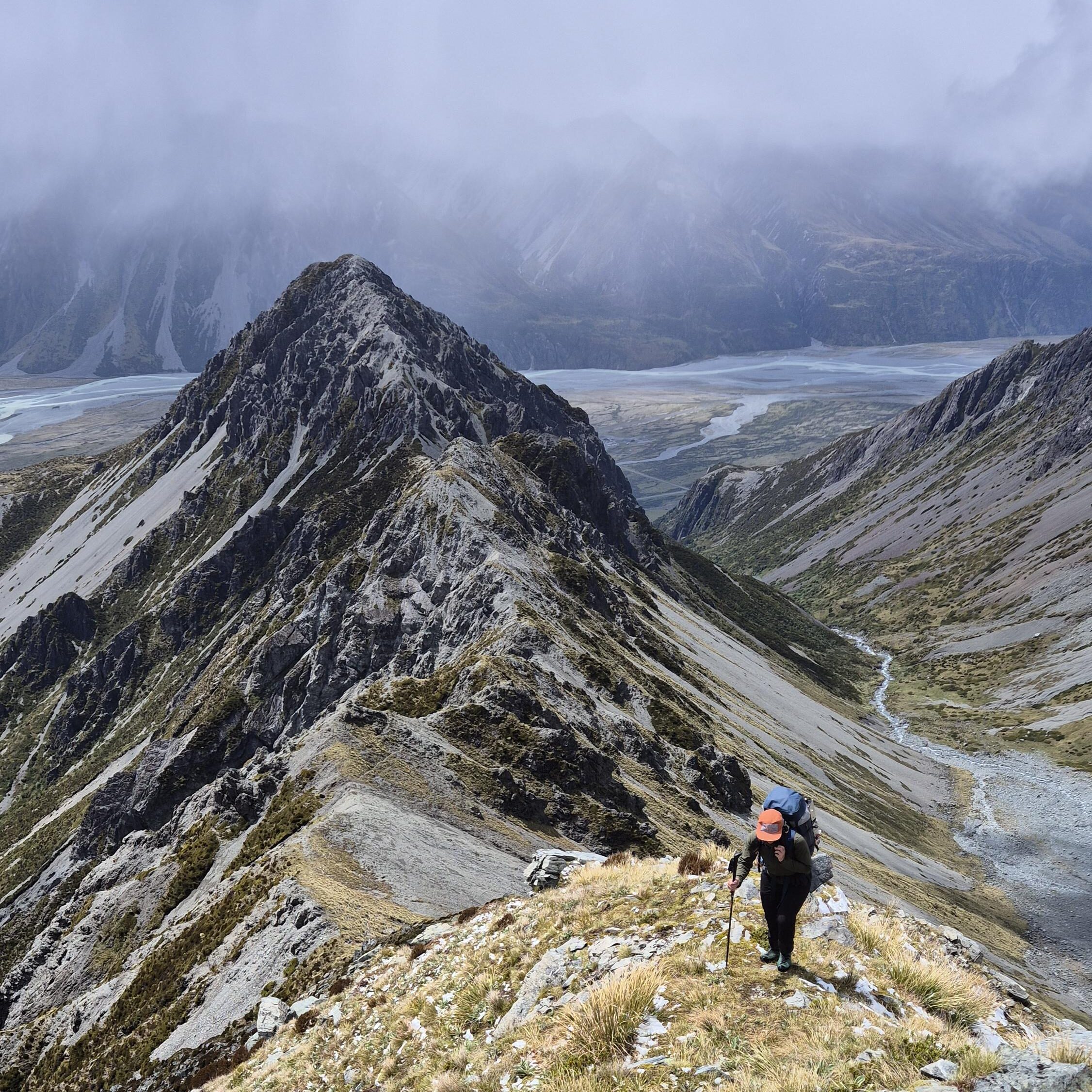
The track out of the village is straightforward and climbs directly towards Sebastopol Ridge. Route finding is simple, the scrub bashing is fairly minimal, and once we gained the ridge the terrain became much more enjoyable.
We cruised up the ridge in good time, leaving the rope in the pack. The rock was solid, the climbing secure and the scrambling genuinely fun.
At one point, a group of around a dozen kea joined us on the ridge. They followed us for a couple of hours, eventually catching up as we stopped for a break. They hung around and circled above us for a while before eventually disappearing off into the mountains.
The final 200–300 metres of elevation gain on the ridge are particularly good. The rock has more of a schist character than the greywacke found elsewhere in the area, giving the ridge a slightly different feel as it steepens towards the plateau. Eventually the ridge leads onto a snow slope that provides access to the Annette Plateau.
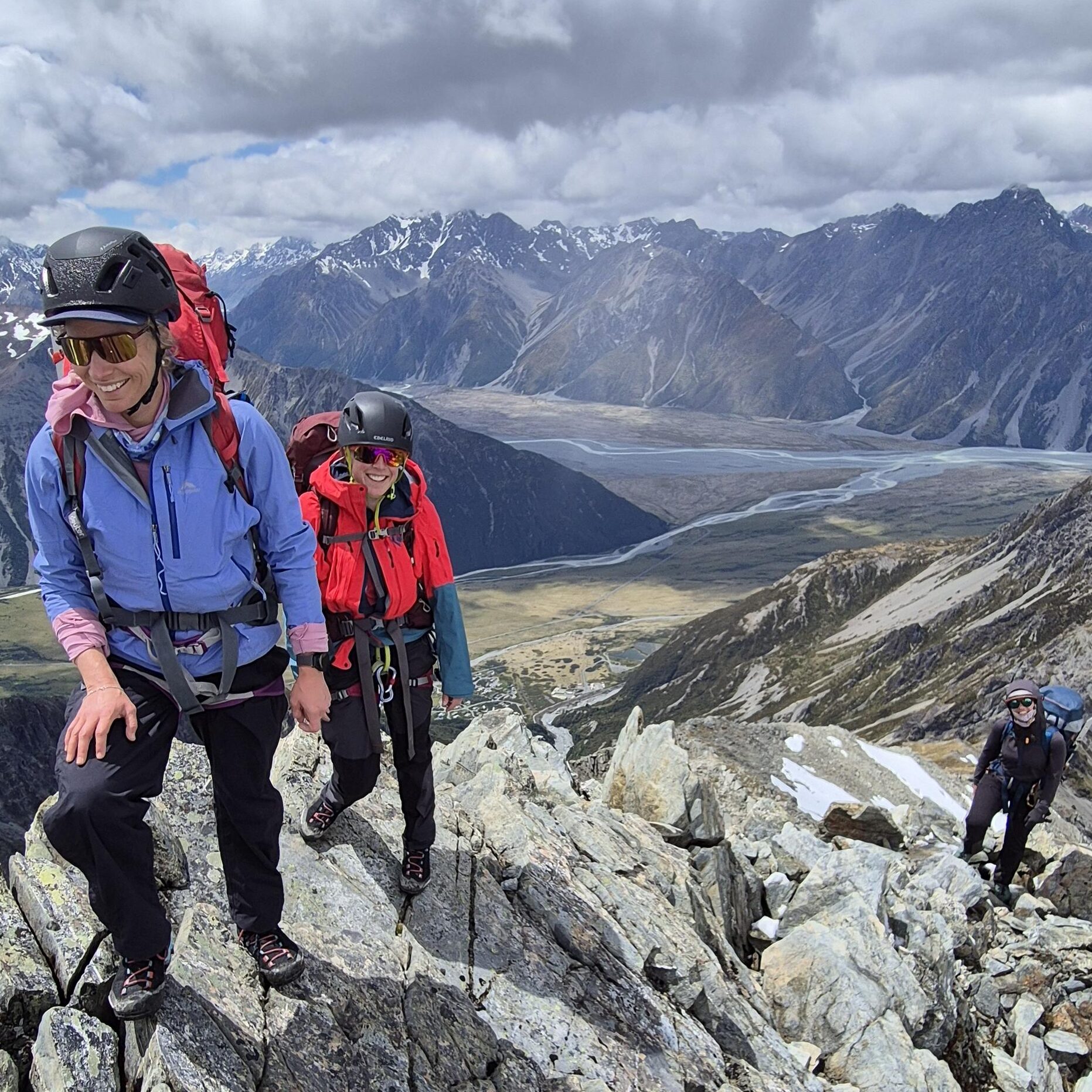
We put the rope on for a couple of pitches, partly to give some of the less experienced members of the group some experience climbing on snow. It was a useful opportunity to practise moving on steeper terrain. Once we reached the plateau, we packed the gear away again.
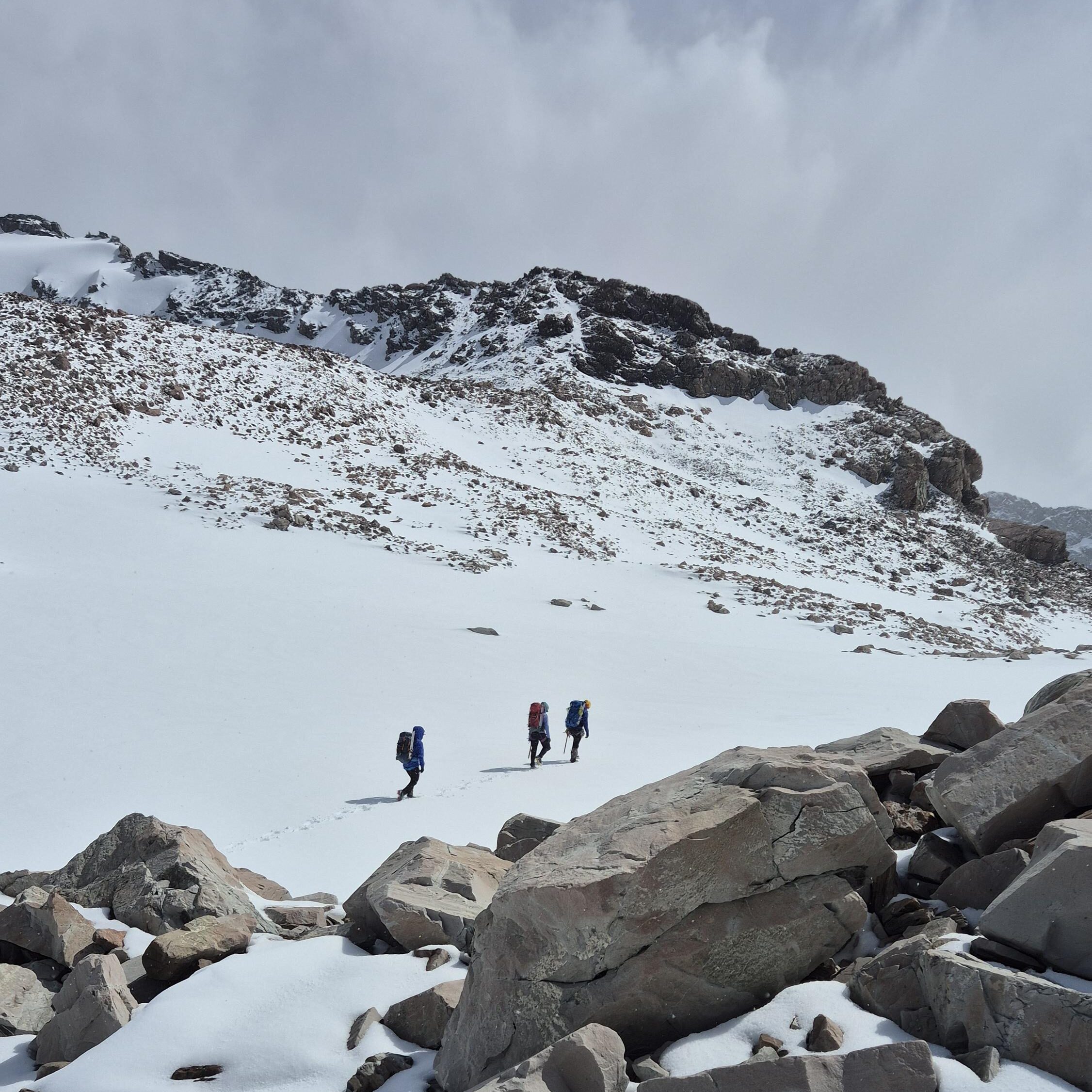
Most of the elevation gain is concentrated in the climb from the village to the plateau, so from there we were able to settle into a much more relaxed pace and wander across the alpine plain towards our planned camp at the top of Sladden Saddle.It was cloudy and warm, but we made good time across the plateau. We made camp on Sladden Saddle that evening, preparing for the west face of Mt Sealy the following morning. It was a bitterly cold night.
The previous day we’d spent a fair amount of time travelling through wet snow, and come the morning our boots had frozen completely solid. Getting our feet into them was painful enough that we definitely all questioned our life choices for a few minutes. The cold also meant that it took us longer than expected to get moving.
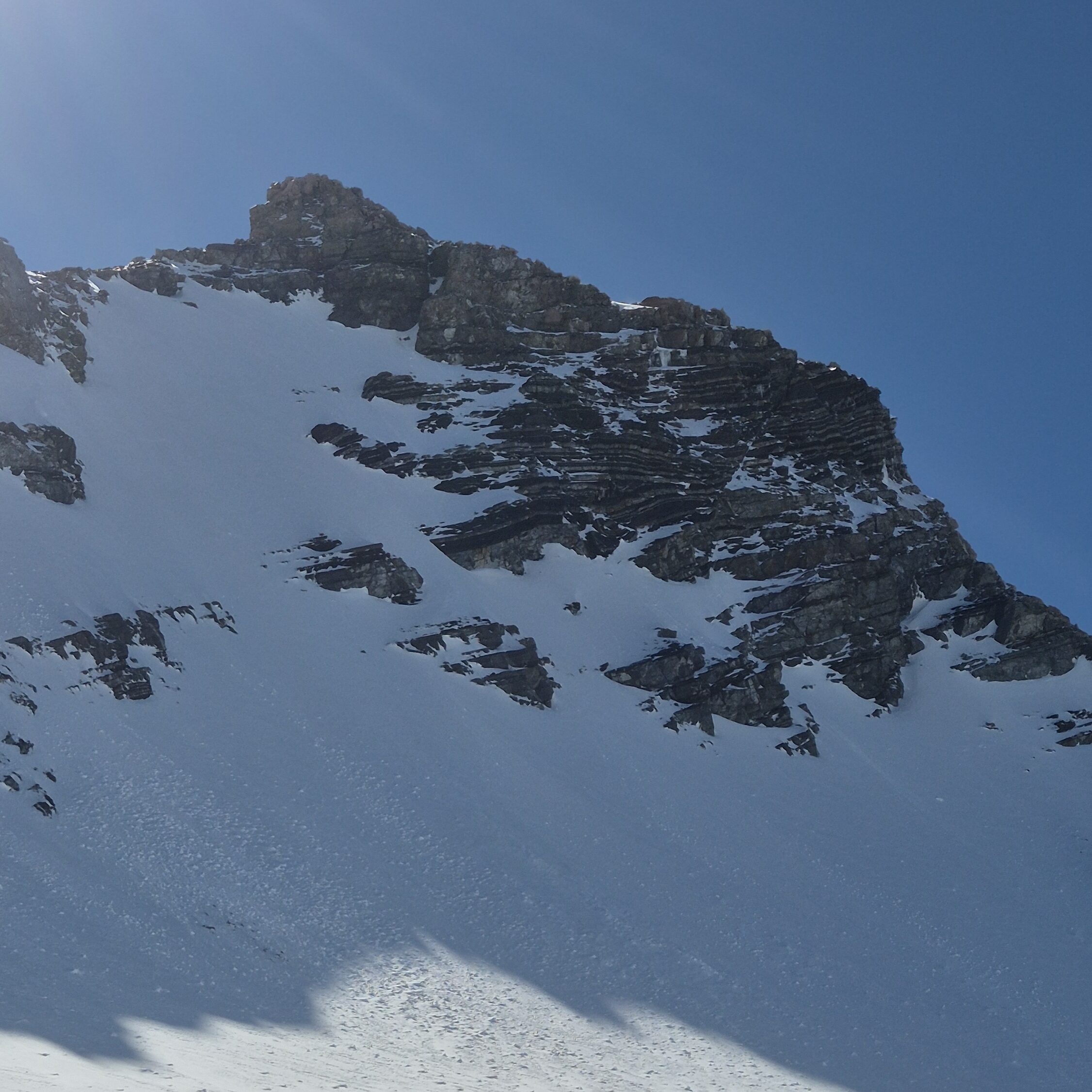
We’d arranged for a helicopter to pick us up around midday, so the slow start meant we were cutting things fairly close.
Once we finally got moving, we made our way towards the west face. A short approach from the saddle, maybe 30 mins before we put the rope up and began climbing the western snow slopes.
The climb itself was enjoyable, three or four rope lengths up a moderately steep snow slope, followed by an easy but exposed traverse towards a final little rock step onto the summit slopes.
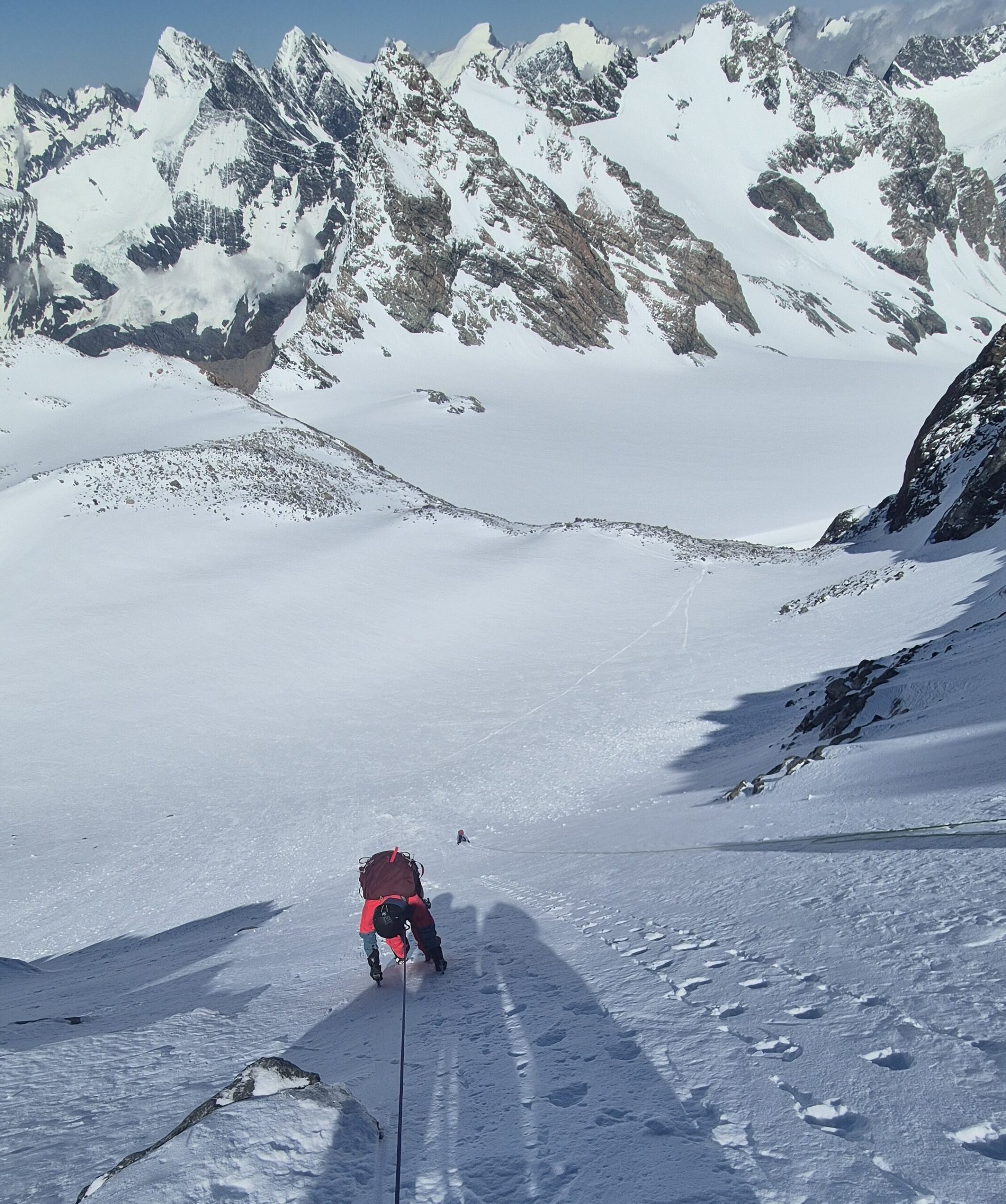
By the time we reached the top, we’d fallen behind our original schedule. Fortunately, we were able to contact our pick up and arrange a delay. That changed the feel of the summit completely.
Instead of immediately turning around and racing back down, we could actually sit, relax and enjoy being there. And it was spectacular. Mt Sealy surely has a high seat at the table.
We were sitting in the sunshine with incredible views stretching along the Main Divide, north and south, and across the surrounding ranges.
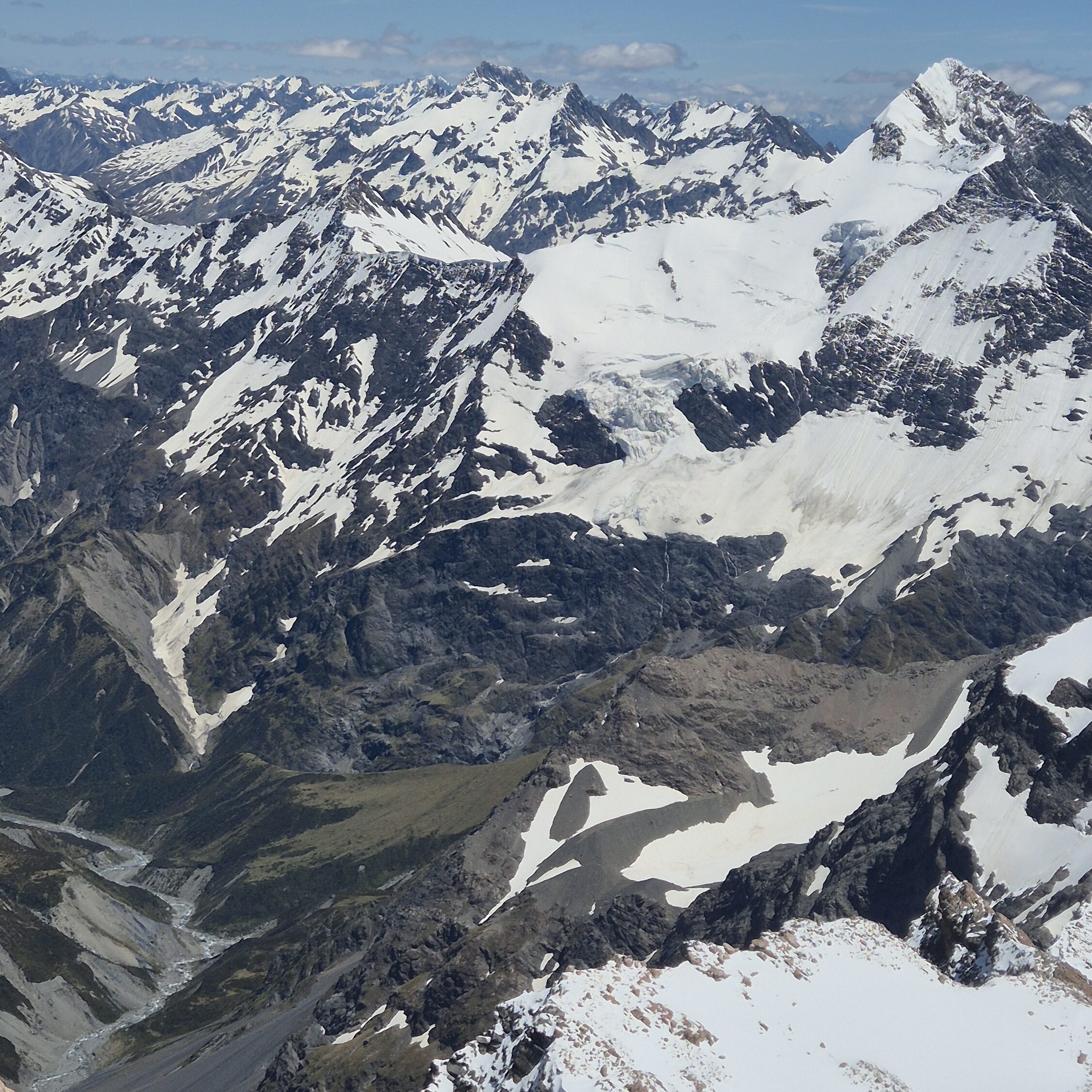
Eventually, we had to start heading down.
The descent gave everyone another opportunity to use the skills we’d been practising. We used a combination of lowers, downclimbing and rappelling to make our way back down the route.
It was a good experience for the whole group, not just climbing the mountain, but getting to practise and experience the different skills that make up a mountaineering day. Back at camp, we packed everything up. Around half an hour later, the helicopter arrived and picked us up.
Thirty minutes after that, we were back in the village enjoying a cold beer and hot, salty chips! There was something particularly satisfying about this trip. I think particularly the way it was so close to the village.
I’d wanted to climb Mt Sealy for a while, and the idea of going straight from the village, up Sebastopol Ridge and onto the plateau had always appealed to me.
It was simply a really good crew, a good mountain and a good couple of days out.
Classic New Zealand mountaineering. A trip I’d fondly recommend.