News
Latest News
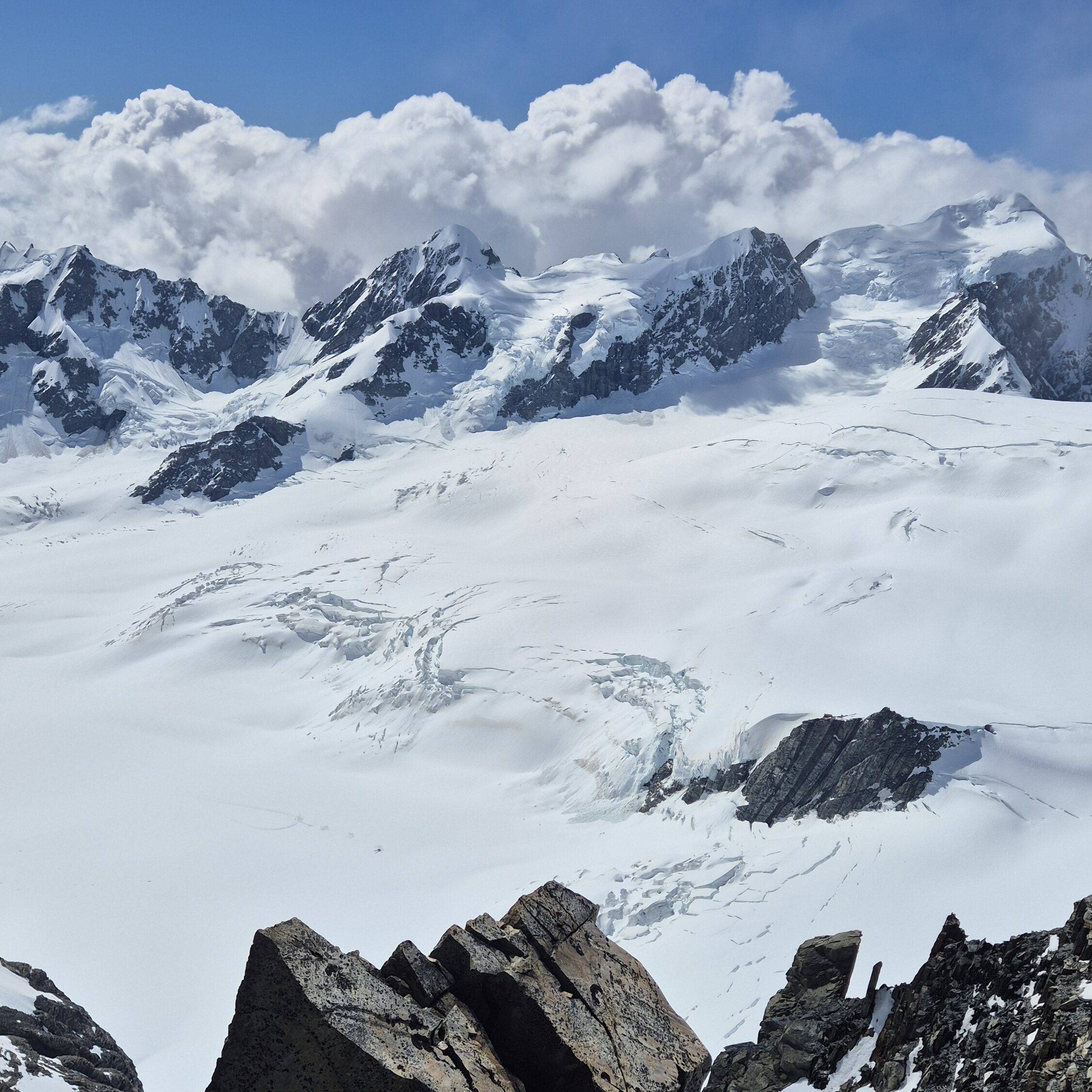
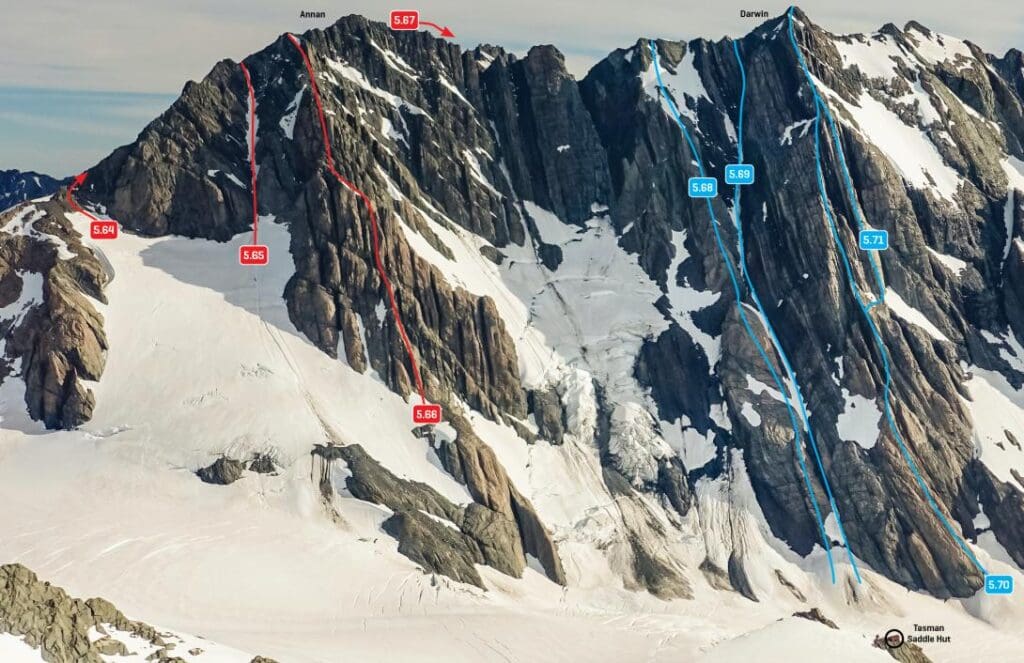
Mt Annan had been on my radar for a while. Viewed from the Tasman Glacier, it has an imposing presence, a massive sweep of rock, with ramparts running from top to bottom. I’d always wanted to see what the view looked like from up there.
The trip started as a mission to Kelman Hut, although we weren’t sure how much the weather would allow us to do. We were also dealing with a high freezing level, so we expected the snow conditions to be soft and punchy. That meant travel on the glacier was likely to be slow and probably pretty limited.
We flew in late one afternoon, but the pilot wasn’t able to get us all the way to Kelman Hut. Low cloud was hanging around, there was very little wind to move it. The pilot, with some skill, managed to get us to within about 300 metres vertical of the hut. From there, we had to drag our gear uphill to the hut. It was hot, sweaty work in the still conditions.
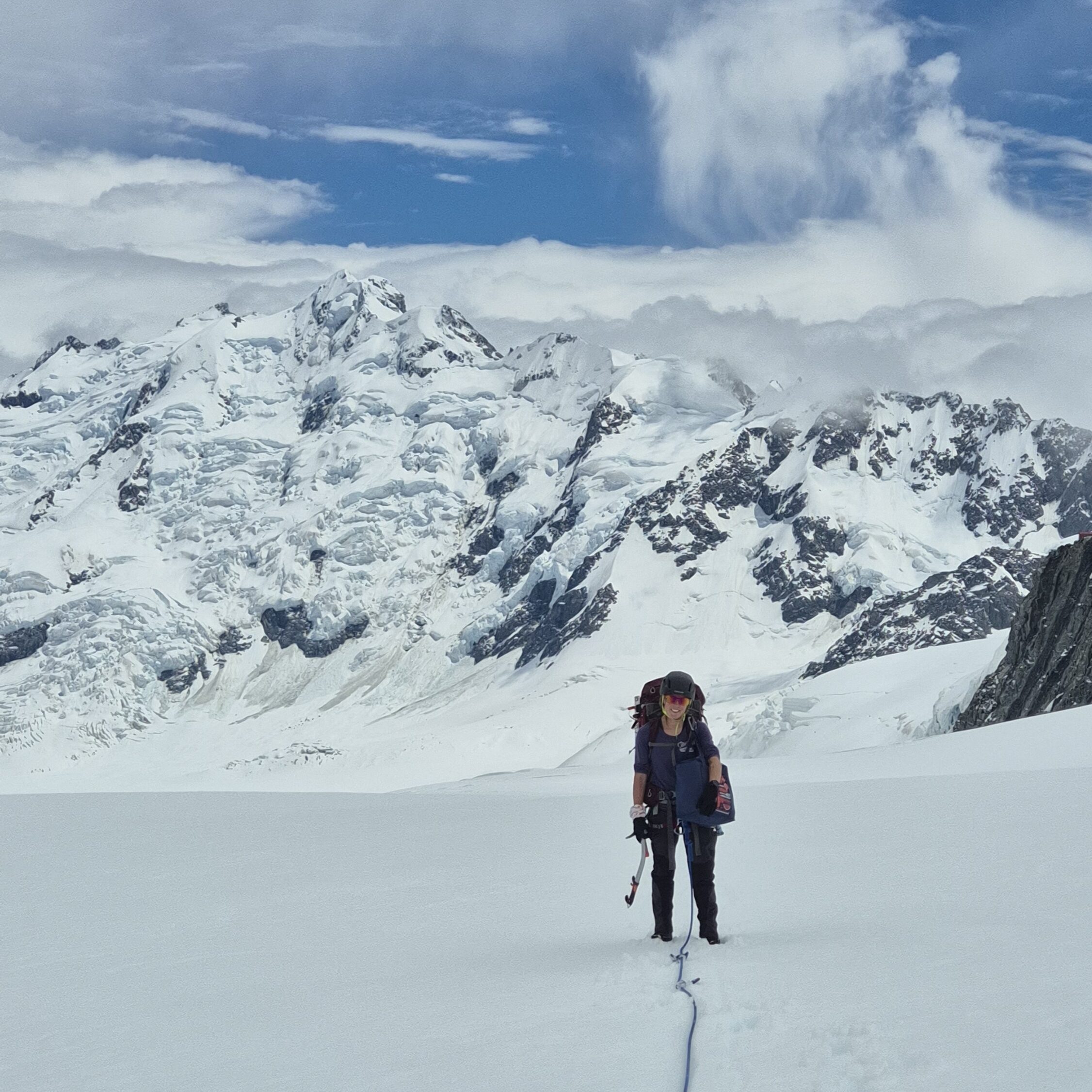
Once we’d dropped our bags, we headed out for a quick recce towards Red Buttress on Mt Abel to get a feel for the conditions. The snow was certainly punchy, but the bergschrund was passable. We climbed a couple of pitches up to warm into the trip, before bailing off.
The following morning we woke to light drizzle, with clouds moving slowly across the head of the Tasman. Rather than committing to an early start, we postponed things and spent some time outside working on anchors and crevasse rescue skills. It was particularly useful for Jess, as it was her first time travelling on a glacier.
As the weather started to improve, we headed back out towards ‘Red Buttress’. The base of which is a mere 200m from the hut door.
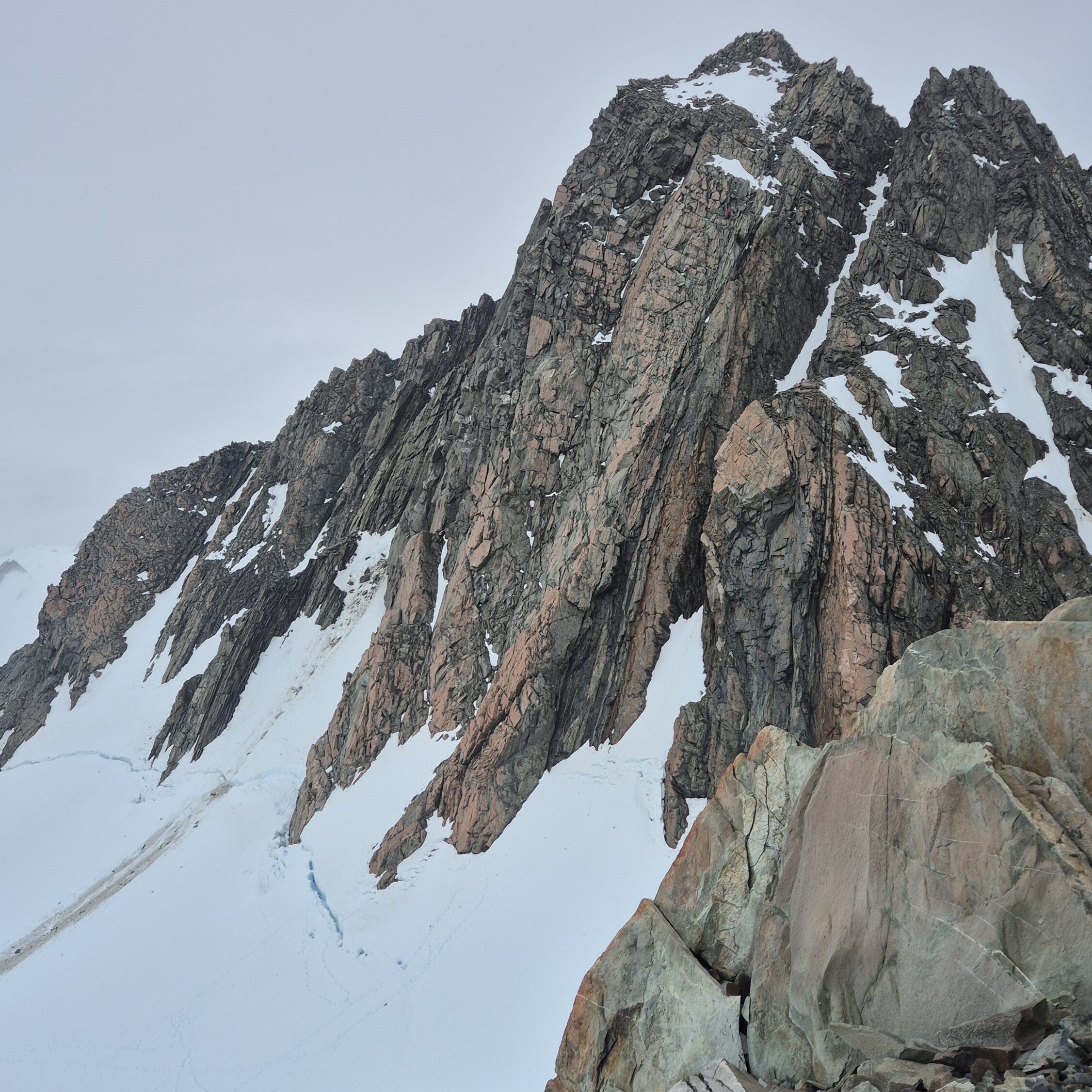
The climb involved around five pitches of mainly scrambling, with the occasional trickier move. It was a pleasant route and had some great views from the top. To think only a stone’s throw from the shelter of the hut.
We rappelled back down, returned to the hut for lunch and a quick refresh, then headed straight back out.
Mt Kain was the next objective, only around 400 metres from the hut. We climbed a steep snow slope to the bergschrund, made a tricky little step across it and established ourselves at the base of ‘Zero Politics’.
The route gave us two or three really good pitches of rock climbing around Grade 16, on lovely featured orange greywacke. The corner pitch at the top is awesome! The descent is the same way you come.
It was another rewarding little route and a fun way to finish the day. We were back at the hut before dark, and over dinner started thinking seriously about the following day.
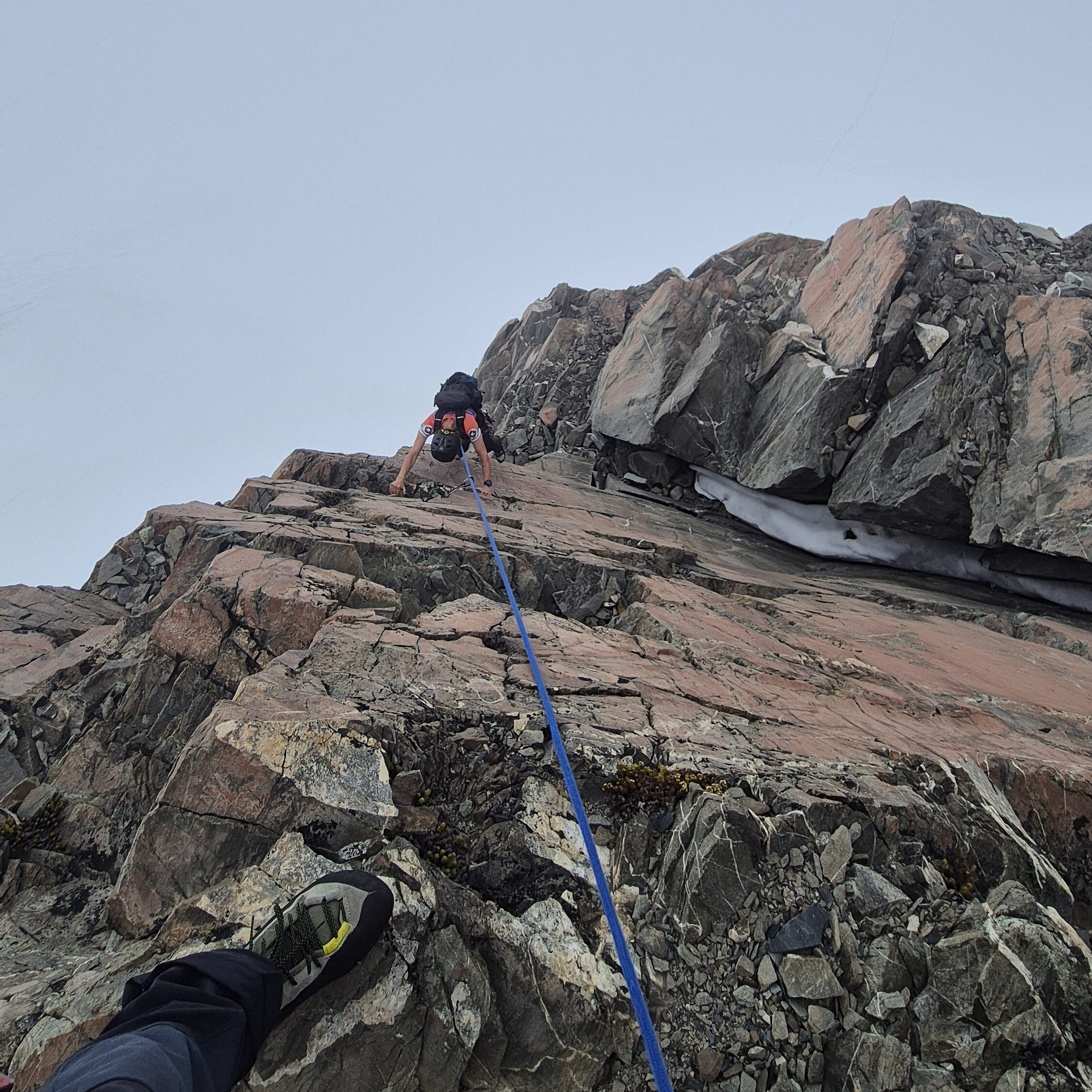
Mt Annan was the objective.
We had planned to make a concerted push for the summit, but there was still plenty of uncertainty around the route. I was confident we’d get close, but I wasn’t assured that we’d reach the top easily.
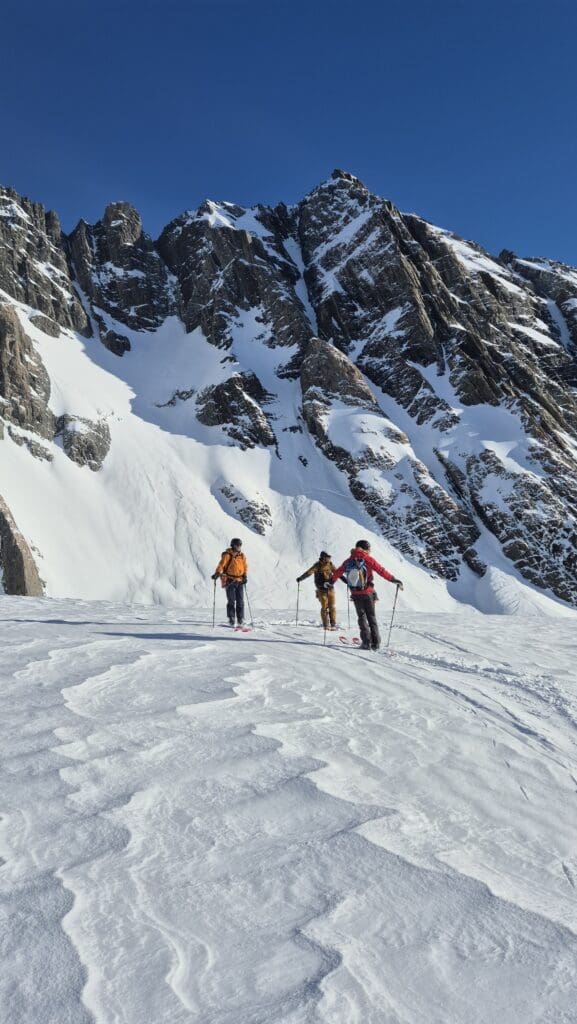
The high freezing level remained the main concern. We didn’t want to spend the day travelling through snow-covered terrain without a refreeze, so the plan was to stay on rock wherever possible.
We left early, making our way down the glacier by moonlight.
As dawn arrived, we started plodding up the large snow slope. After about 400m vertical we arrived at the base of the ridge. The snow was exactly as expected, soft and punchy. Jess put in a great shift putting steps up the slope. In most places we were punching through to our calves or knees.
By around 9am we reached the base of the ridge and took a short break.
From there, the character of the day changed.
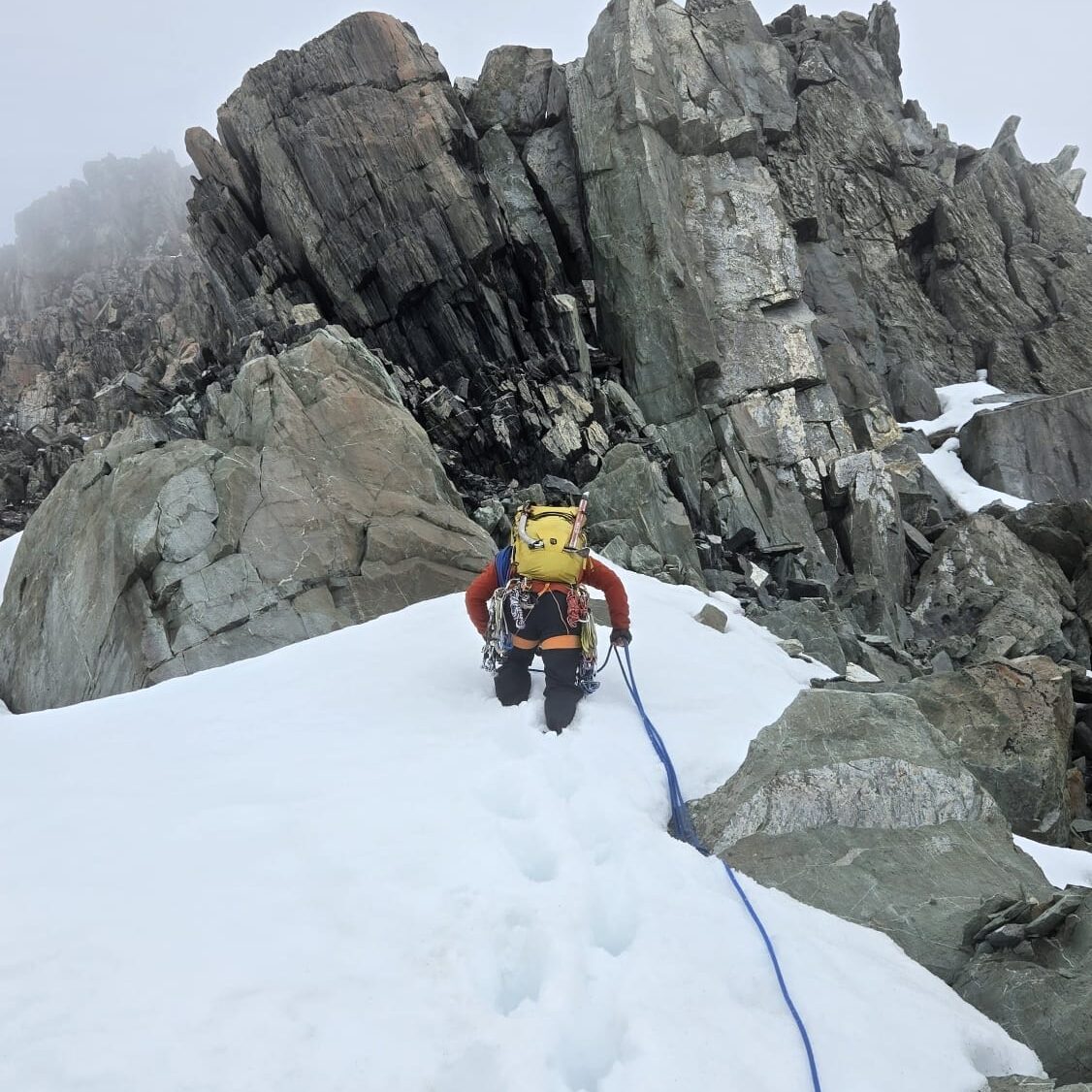
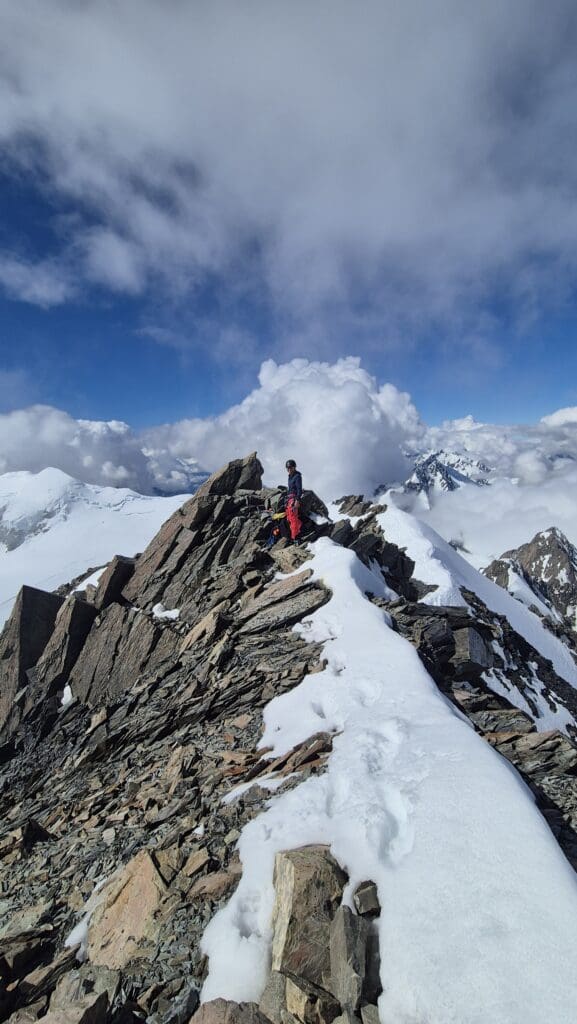
The climbing itself wasn’t particularly difficult, but it was exposed and the rock was consistently poor. That meant one could never quite relax as much. Every movement needed to be deliberate and intentional, every foot and hand hold well inspected. The difficulty wasn’t necessarily in the individual climbing moves, it was in maintaining a high level of focus for hours at a time on terrain where you didn’t want anything to break.
It was the sort of climbing where you only really relaxed once you stopped.
I did a lot of short pitching, combined with sections of simul-climbing. Route finding was mostly straightforward once I’d worked out the natural lay of the land.
The rock quality, however, made for slow progress. We kept moving steadily upwards, and around five hours after leaving the base of the ridge we found ourselves roughly 20 vertical metres below the summit. The summit itself sits perched on top of a steep, vertical block. Cracked and fractured. A few different options exist.
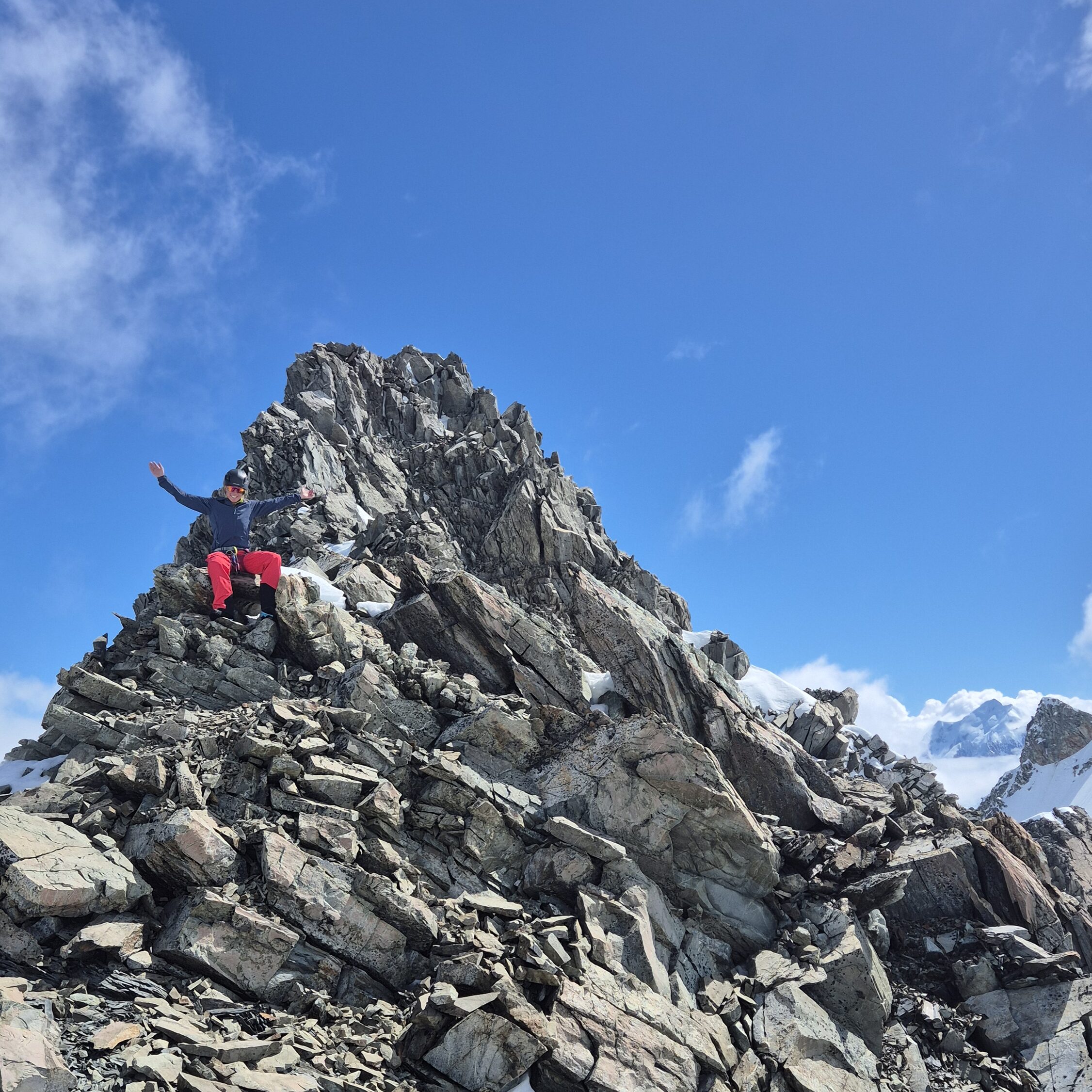
By this point, though, I was conscious that I had been doing all the leading and route finding. I needed to save some mental energy for the descent. The final section just seemed like it would take more effort than it was worth.
We’d already had a great day, we’d climbed high enough to get an excellent perspective of the surrounding mountains, and the weather was improving. Rather than pushing on simply to stand on the highest point, we decided to stop and enjoy where we were. And the view was exactly what I’d hoped for.
After taking some time to enjoy the vista, we started the descent. It took around three hours, including two rappels, and required just as much concentration as the ascent. The loose rock meant we had to remain deliberate all the way down. Knowing the way certainly alleviated a lot of decision making. I do like climbing ridges for this reason. Especially before I try an ascent of the mountain’s western face. Knowing the descent is a massive advantage.
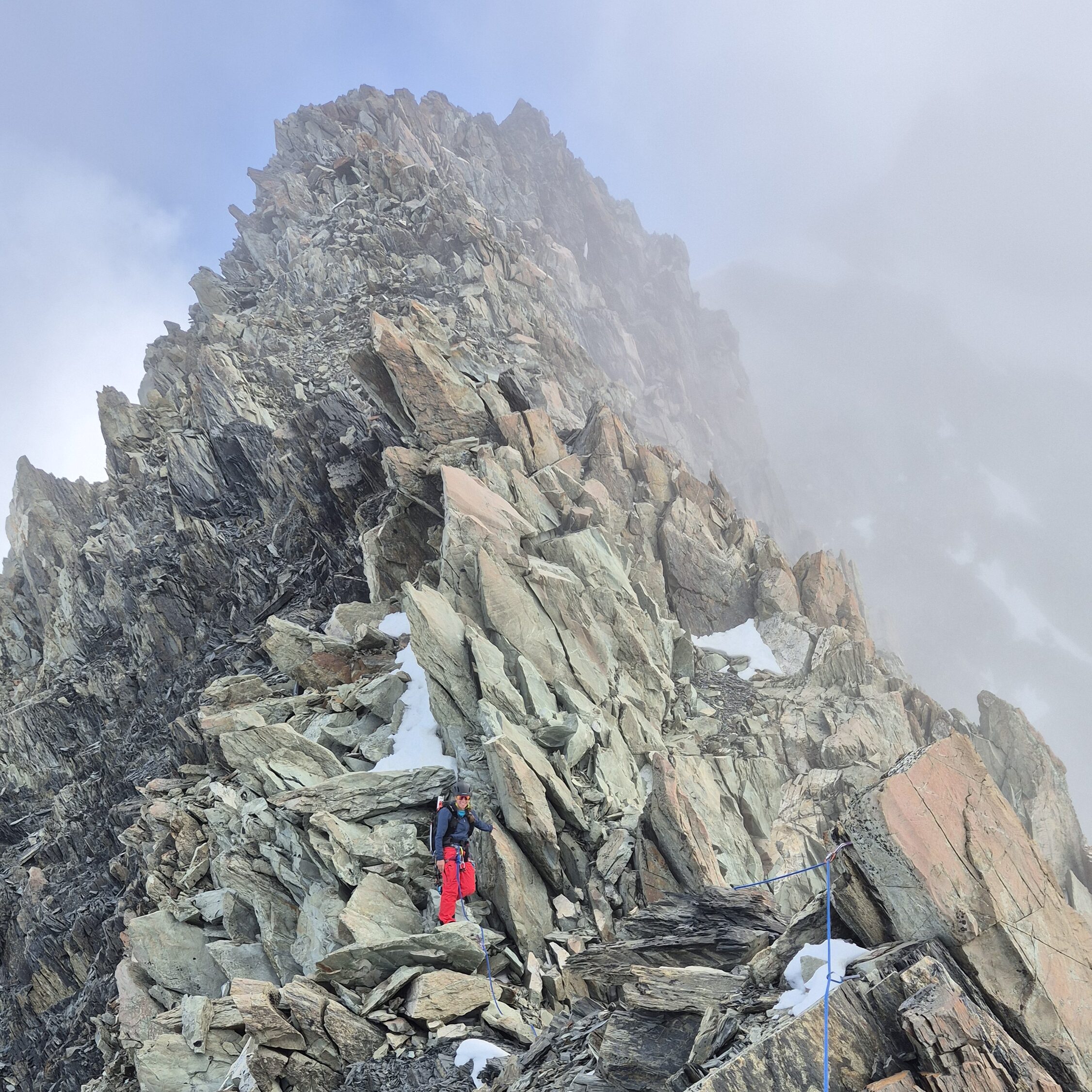
By the time we returned to the glacier, we’d had a long and enjoyable day. We were both thrilled with what we saw and climbed. The sunset and then the bright rise of a full moon over the glacier, cast displays of light and shadow that made the whole experience feel extra special. It was a wondrous atmosphere as we made our way back up the glacier to the hut.
The trip had started with a poor weather outlook, a high freezing level and questionable glacier conditions. Yet it ended with 3 great climbs.
And I’d finally got to stand high on that enormous castle wall I’d been looking at from for so long!
I can’t say I’d necessarily recommend Mt Annan unless you really like chossy ridges (I seem to have developed a bit of an affinity for them), but the mountain is striking, the views are exceptional, and the experience gave me a much better understanding of the terrain and, importantly, the descent from Mt Annan.
That knowledge will be valuable if I get the opportunity to return and climb one of the west-face rock routes.
A lot of the time, not quite reaching the summit, has no say in the overall experience of a day in these high places.
The internet has made mountain information more accessible than ever before.
You can watch climbing tutorials, download GPS tracks, and read countless trip reports.
But no video can replace learning alongside someone who has spent years making decisions in real mountain environments.
That’s where experienced mountain guides provide enormous value.
Experience You Can’t Download
Every mountain day is different.
Weather changes.
Snow conditions evolve.
People respond differently to fatigue.
Experienced guides have encountered countless situations that simply can’t be replicated online.
This experience allows them to recognise problems early and adapt before they become serious.
Learn Faster
One of the greatest benefits of mentorship is accelerating your learning.
Instead of relying on trial and error, you receive immediate feedback on:
- Movement techniques
- Route selection
- Equipment use
- Decision making
- Hazard assessment
Small improvements made consistently quickly build into lasting confidence.
Build Independent Skills
Great guiding isn’t about creating dependence.
It’s about helping clients become capable of making their own decisions in the future.
Throughout every trip, you’ll gain a better understanding of:
- Why a particular route was chosen
- How hazards were assessed
- What backup plans were considered
- How conditions influenced decisions
These lessons become valuable long after the trip ends.
Safety Is a Mindset
Mountain safety isn’t achieved by carrying more equipment.
It’s created through preparation, awareness, and thoughtful decision-making.
Professional coaching helps develop habits that experienced mountaineers use every day.
These include:
- Constant observation
- Conservative planning
- Effective communication
- Flexible decision-making
Confidence Comes Through Practice
Confidence isn’t built by reading about mountaineering.
It’s developed through doing.
Each day in the mountains provides opportunities to practise new skills under guidance, ask questions, and gain practical experience in real conditions.
Over time, uncertainty is replaced with calm, informed decision-making.
Investing in Your Future Adventures
Working with a mountain guide is about much more than one successful trip.
It’s an investment in every adventure you’ll have in the future.
The skills, judgement, and confidence you develop today will continue serving you whether you’re climbing in New Zealand, exploring ski touring terrain, or pursuing alpine objectives overseas.
The greatest reward isn’t simply reaching another summit—it’s becoming a safer, more capable mountain traveller who can enjoy the mountains for years to come.
If you’re ready to build practical mountain skills through personalised coaching, mentorship, or guided alpine experiences, get in touch and start planning your next adventure.
There’s something unforgettable about stepping into New Zealand’s Southern Alps for the first time.
Towering peaks, glaciers, snow-covered ridges, and rapidly changing weather create one of the world’s most spectacular alpine environments. They’re also environments that deserve respect.
If you’re preparing for your first alpine adventure, a little planning can make all the difference.
Start With Realistic Goals
One of the biggest mistakes beginners make is aiming too high too soon.
Building experience gradually allows you to develop confidence while learning how alpine terrain behaves in different conditions.
Every successful mountaineer started with smaller objectives before progressing to more technical climbs.
Build Your Fitness
Mountain fitness isn’t simply about being strong.
It’s about being able to move efficiently over uneven terrain for several hours while carrying equipment.
Focus on:
- Walking or hiking regularly
- Leg strength
- Balance and stability
- Cardiovascular endurance
- Recovery between long days
The fitter you are, the more mental energy you’ll have available for decision-making.
Learn Essential Skills
Before attempting alpine terrain independently, it’s worth developing skills such as:
- Ice axe use
- Crampon techniques
- Navigation
- Avalanche awareness
- Rope systems
- Weather interpretation
Learning these skills under professional instruction builds confidence while reducing unnecessary risk.
Understand Mountain Weather
Weather in alpine environments changes incredibly quickly.
Blue skies can become whiteout conditions within hours.
Learning how to interpret forecasts and recognise changing weather on the mountain is an essential part of alpine travel.
Invest in Quality Equipment
You don’t need every piece of gear immediately.
Instead, focus on equipment that keeps you safe and comfortable.
This includes:
- Proper alpine boots
- Waterproof clothing
- Insulating layers
- Helmet
- Navigation equipment
- Emergency supplies
Experienced guides can also help you decide what gear is worth purchasing and what can be hired.
Learn From Experienced Mentors
Books, videos, and online courses are valuable, but nothing replaces learning alongside experienced professionals.
Receiving real-time feedback helps you develop good habits from the beginning and avoid mistakes that can become difficult to correct later.
Respect the Mountains
Perhaps the most important lesson is understanding that the mountains will always be there.
Sometimes the best decision is turning back.
Making conservative decisions isn’t failure—it’s good mountain judgement.
The goal is to enjoy many years of safe adventures, not just one successful climb.
Whether you’re taking your first alpine steps or preparing for bigger objectives, personalised coaching can help you develop the skills and confidence needed to explore New Zealand’s mountains safely.
For many people, standing on a mountain summit is the ultimate goal. It’s the photo everyone remembers and the moment that often defines the trip. But experienced mountaineers know the summit is only one small part of a much bigger journey.
The most valuable thing you can take away from any mountain adventure isn’t another peak on your list—it’s the knowledge, confidence, and decision-making skills that stay with you long after you’ve returned home.
Mountains Reward Good Decisions
Every mountain presents unique challenges. Weather changes quickly, snow conditions evolve throughout the day, and terrain that appeared straightforward on a map can feel very different when you’re standing in it.
Strong mountain skills allow you to:
- Read changing conditions
- Choose safer routes
- Manage objective hazards
- Make confident decisions under pressure
- Know when to continue—and when to turn around
These abilities aren’t learned overnight. They’re developed through experience, education, and mentorship.
Technical Skills Are Only Part of the Picture
Many aspiring climbers focus heavily on rope work, crampon techniques, or ice axe skills. While these are important, they’re only part of becoming a capable mountain traveller.
Just as valuable are skills such as:
Route Finding
Learning to interpret terrain allows you to choose efficient, safer lines while avoiding unnecessary exposure.
Risk Management
Every decision in the mountains carries some level of risk. Understanding how to assess and reduce those risks is one of the most valuable skills you can develop.
Mountain Judgement
Good judgement often comes from recognising subtle warning signs before they become major problems.
Experienced mountaineers constantly ask themselves:
- Has the weather changed?
- Are snow conditions deteriorating?
- Is our pace sustainable?
- Do we still have enough margin for a safe descent?
Confidence Comes From Preparation
Many people think confidence means being fearless.
In reality, confidence comes from preparation.
Knowing you’ve practised the right skills, understand the terrain, and have the ability to adapt creates calm decision-making even in challenging situations.
That’s why coaching and mentorship focus on building capability—not just completing objectives.
Every Trip Is an Opportunity to Learn
Whether you’re heading into the Southern Alps for the first time or preparing for larger alpine objectives overseas, every outing offers valuable lessons.
The best mountain guides don’t simply lead people to spectacular places—they help them understand why decisions are made throughout the journey.
By asking questions, practising techniques, and reflecting after each trip, you’ll continue developing into a more independent mountain traveller.
The Journey Doesn’t End at the Summit
The mountains have an incredible way of teaching patience, humility, and resilience.
Reaching the summit is rewarding, but becoming a safer, more capable mountaineer is something you’ll carry into every future adventure.
Whether your goal is your first alpine climb or preparing for more challenging objectives, investing in your skills will always provide the greatest return.
Ready to build confidence in the mountains? Personalised coaching and mentorship can help you develop the practical skills and judgement needed for safer, more rewarding alpine adventures.